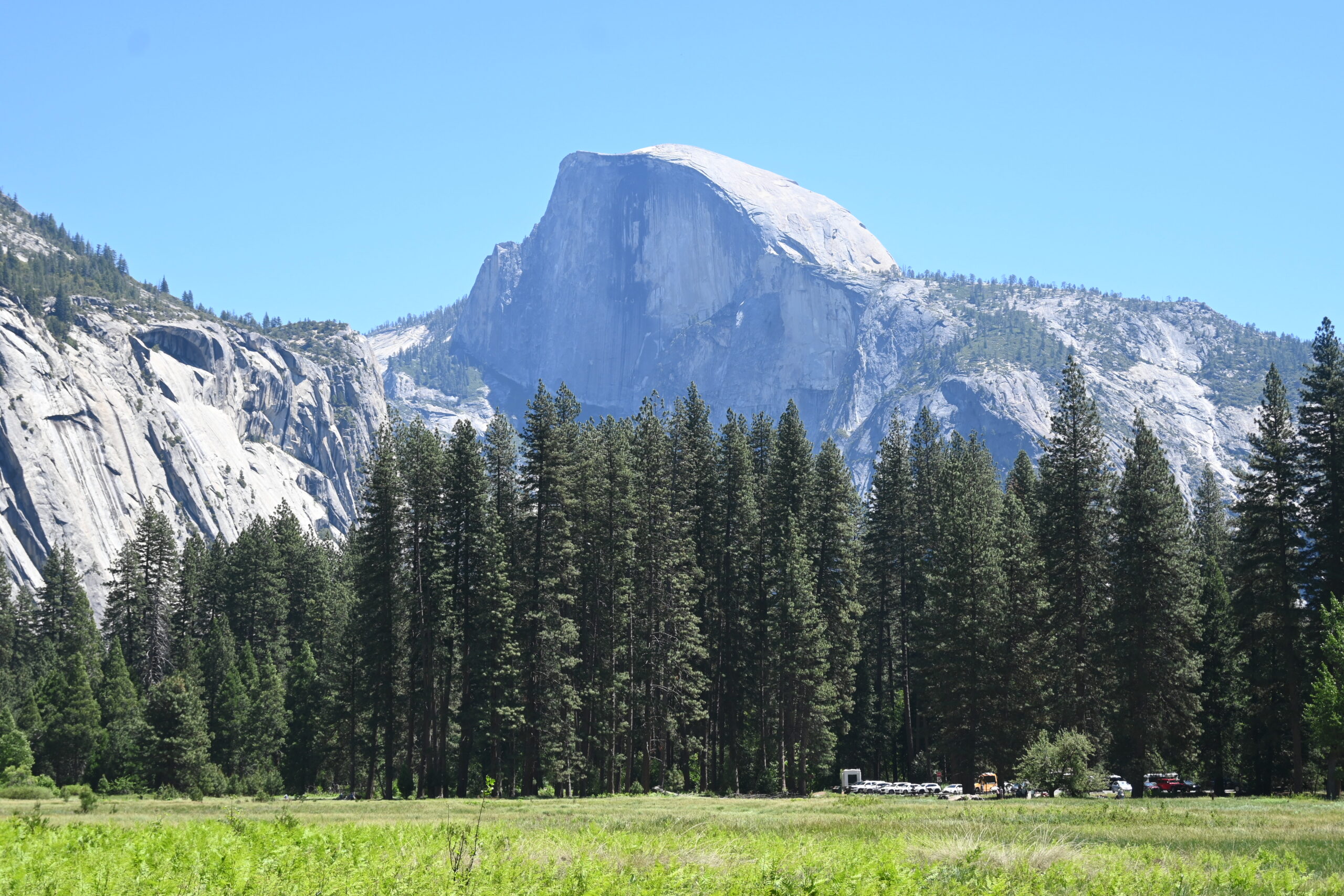
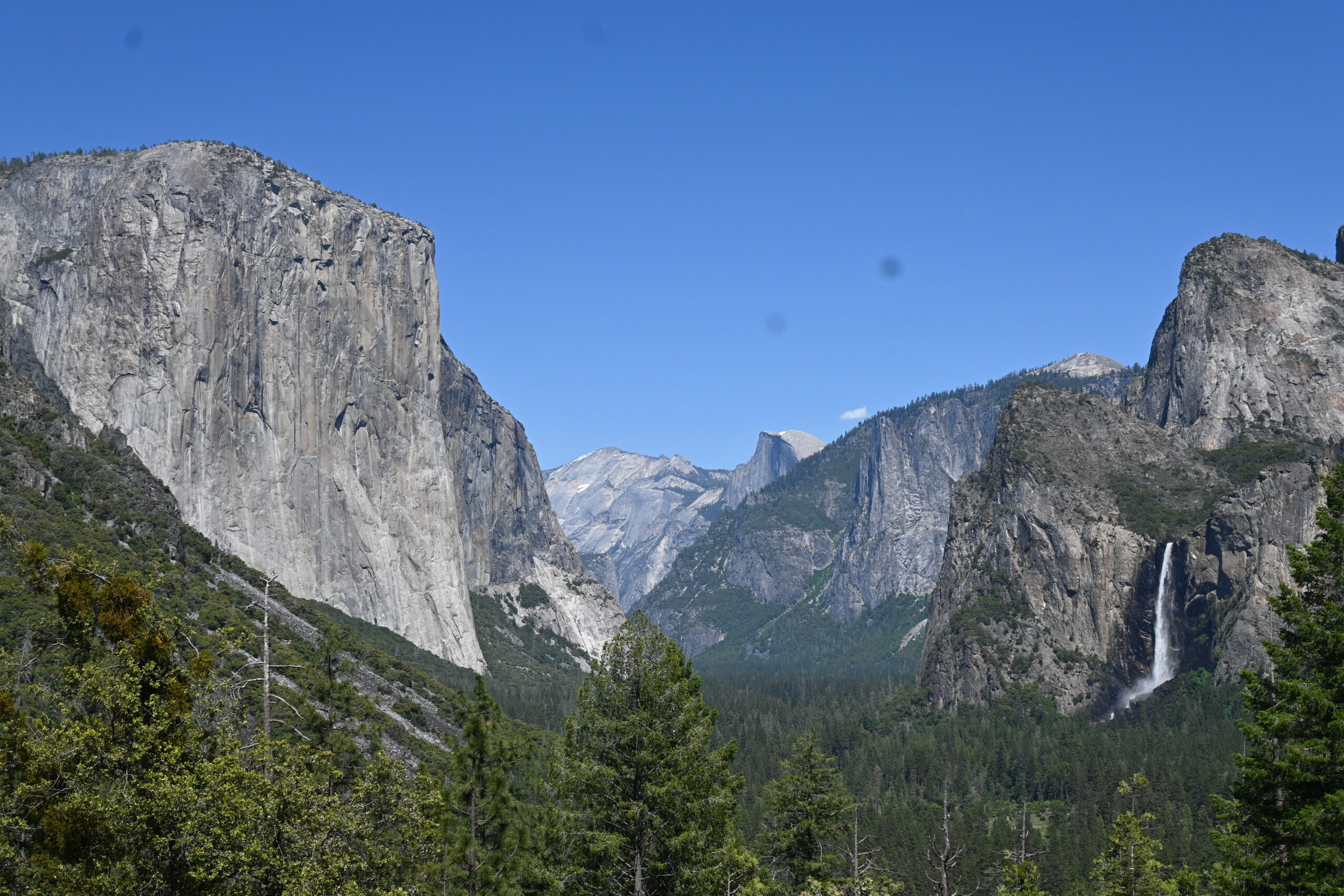
Tunnel View of Yosemite National Park
The line to enter the park stretched on endlessly as we idled in our car beneath the blazing California sun on a Thursday morning in mid-May. We had set out from our glamping resort in Mariposa, about thirty miles west of the entrance, expecting a scenic approach. Instead, the drive unraveled into frustration: a section of Highway 41 had been shut by a landslide, and the one-way, mile-long detour was backed up for miles. By the time we reached the gate, however, the process was mercifully swift. A friendly ranger checked my Annual National Park Pass and ID, handed us maps, and waved us through.
We descended into the valley. Almost immediately, the road funneled into a one-way, anti-clockwise loop stretching thirteen miles. Cars clogged the lanes, while pedestrians streamed along the edges. Near Yosemite Valley Lodge, fortune briefly favored us—a car pulled out just as we arrived, and we slipped into its place. From there, we followed the well-paved, clearly marked one-mile trail to Lower Yosemite Falls. Because we had our dog with us, we were confined to paved paths.
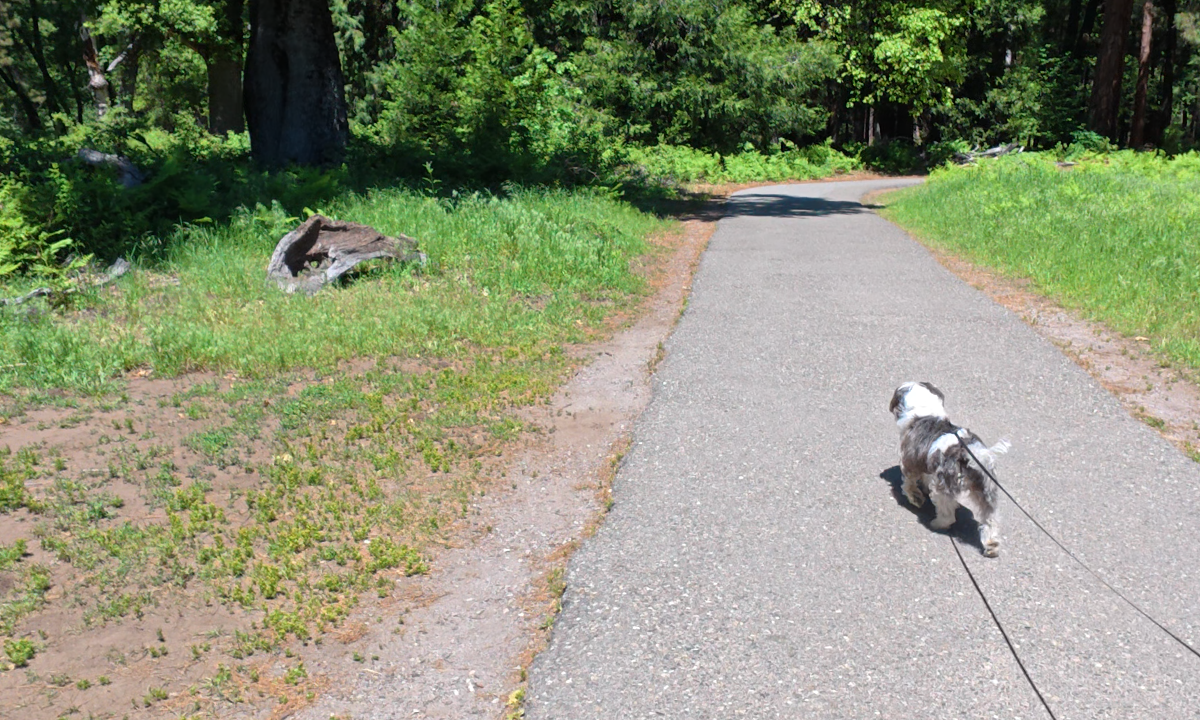
Our dog leading the way on the trail
My wife walked about ten feet ahead, holding the leash, when a woman approaching from the opposite direction suddenly screamed, “Snake!” I froze. At my feet, barely a foot away, lay a large rattlesnake, easily six feet long. I stepped back instinctively and watched, transfixed, as it glided across the concrete path and disappeared into the brush. Another passerby warned us about coyotes in the area and urged caution with our small dog. Fortunately, we saw none.
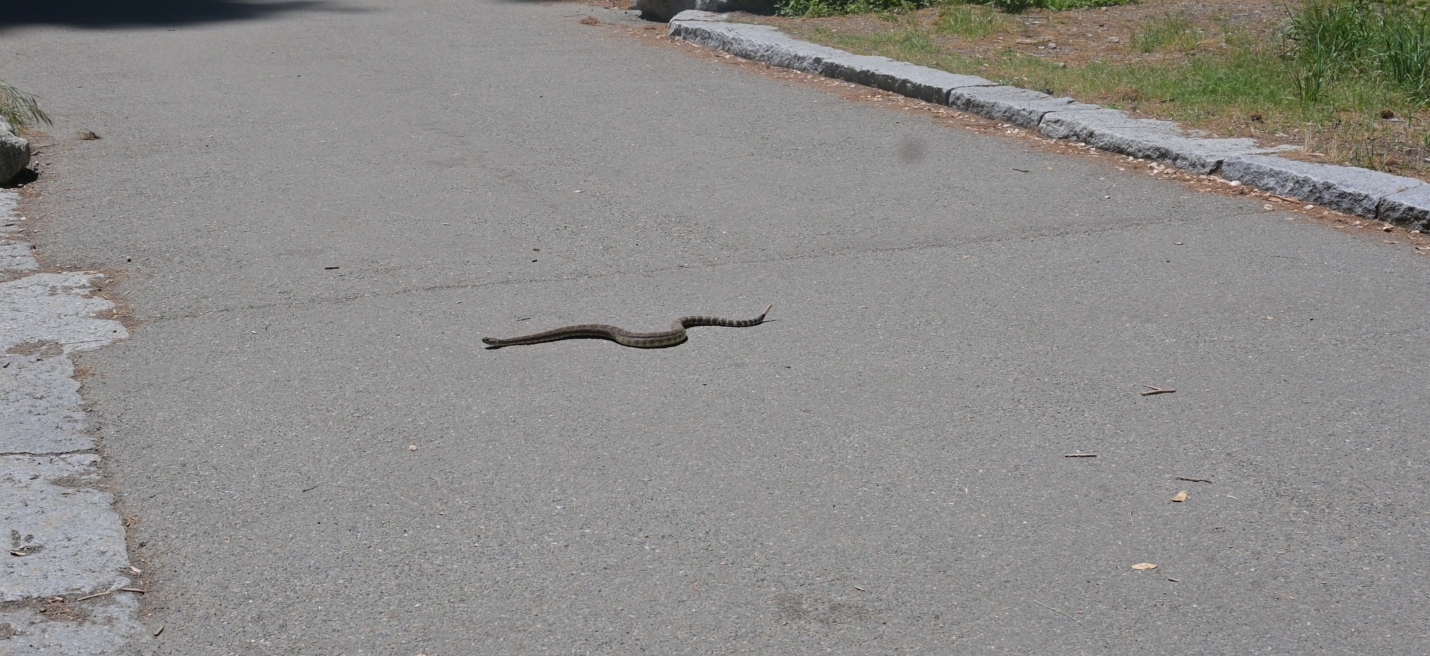
A rattlesnake crossing the trail right in front of me
All around us rose sheer rock faces and thundering waterfalls, their scale almost disorienting. We crossed marshy ground and stepped over narrow creeks before reaching the base of the falls, where water crashed onto the rocks below with relentless force. At 2,425 feet, Yosemite Falls is the tallest waterfall in North America, dropping in three distinct stages: the 1,430-foot upper fall, the 675-foot middle cascades, and the 320-foot lower fall. A more strenuous seven-mile hike leads to the upper falls—a trail we had completed on a previous visit—but it was out of reach this time with the dog.
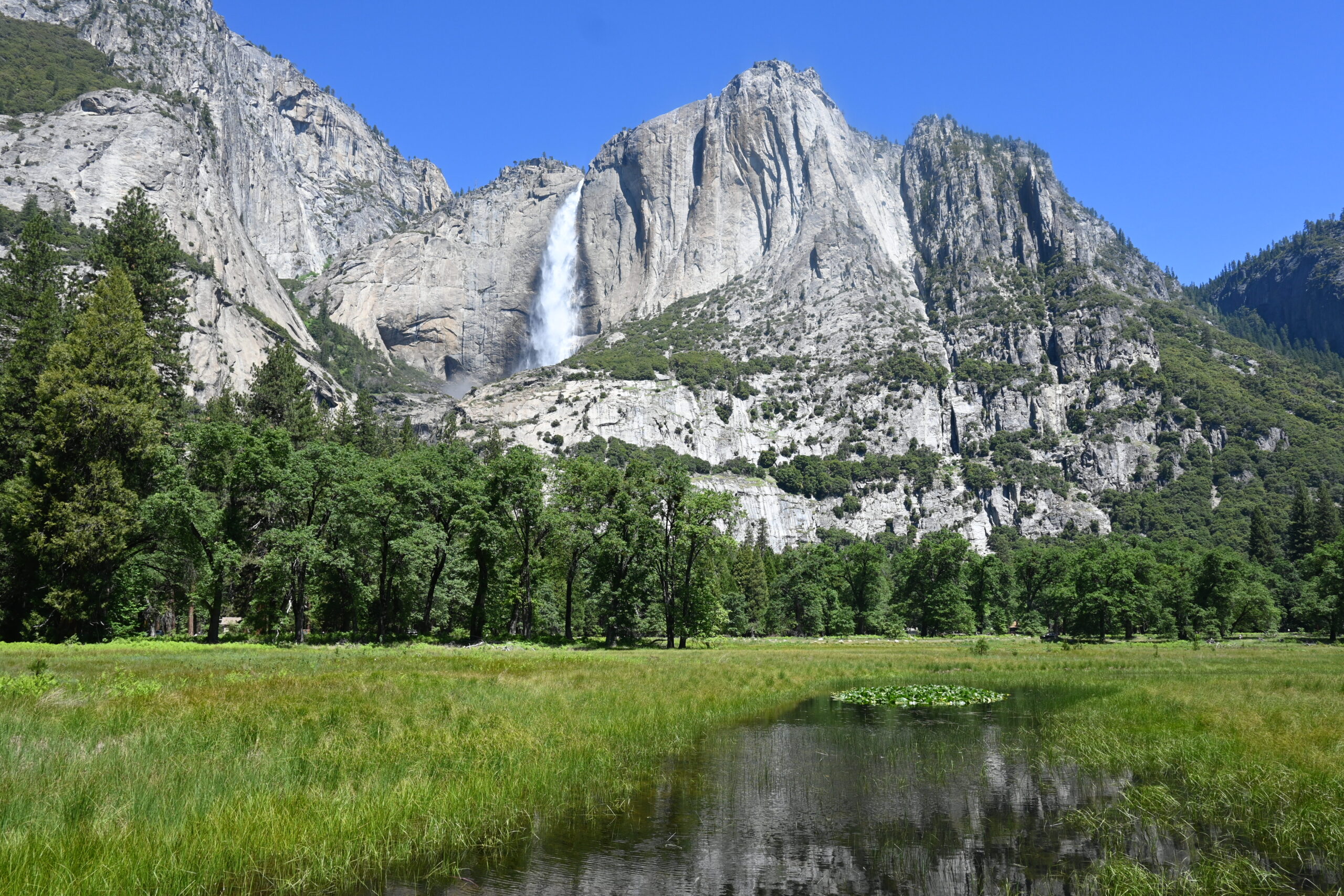
Yosemite Falls from the valley
By midday, we turned toward the village in search of lunch, only to be caught again in a slow crawl of traffic. The narrow one-way road, lined with parked cars on one side and families—children among them—walking on the other, made progress painfully slow. When we finally arrived, it took over thirty minutes to find parking. We then stood in line for a volunteer to advise us on where to eat and how best to navigate the park with our dog.
We had visited Yosemite National Park many times before—camping both within the park and along its edges, hiking its trails, lingering beside the Merced River on long, unhurried afternoons. In those earlier years, especially in the off-season, the crowds were sparse, and the experience felt intimate, almost meditative. But I had heard the warnings: visitation had surged over the past decade. In 2021, the National Park Service introduced a reservation system to manage the influx. That system was discontinued in 2026. Hoping to avoid the worst of the crowds, I had chosen a mid-week visit in mid-May. I was wrong. I can only imagine what peak summer must bring. A week after our return, the LA Times ran a front-page story on the “crowding at Yosemite”.*
I have long believed that the creation of the National Parks was America’s best idea. I have visited nearly all the parks in the western half of the country and hope to complete the rest in the east in the coming years. Yet this visit gave me pause. The promise of wilderness is solitude—a chance to step outside the pressures of urban life. Increasingly, however, the parks mirror those very pressures: congestion, noise, competition for space. The parks belong to everyone, of course. The challenge lies in preserving both access and experience.
After lunch, we continued to Bridal Veil Fall, where the mist can be felt from a quarter mile away, a cooling veil against the afternoon heat. From there, we drove to Tunnel View, where the valley opens in one of the most iconic vistas in the country—El Capitan, Half Dome, and a tapestry of waterfalls unfolding in the distance.
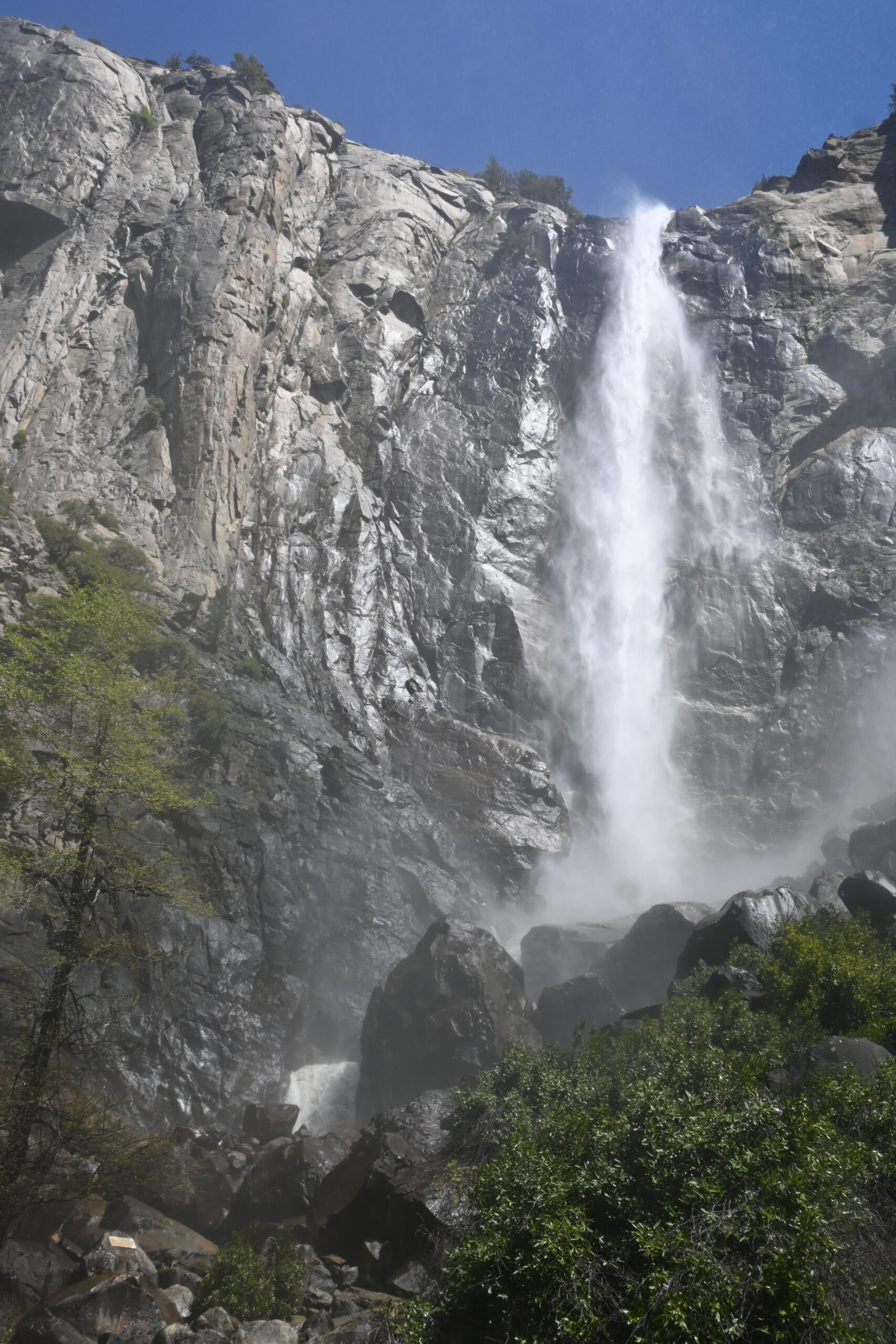
Bridal Veil Falls
The following day, Tioga Road—closed since fall—reopened, and we seized the opportunity. The seventy-mile drive to Tioga Pass took over two hours, the road winding precariously along mountain slopes, clinging to cliffs, threading through tunnels. Within an hour, we had climbed from the valley floor to nearly 9,000 feet. The air sharpened; snow lingered along the roadside. Here, at last, the crowds thinned. We found something closer to what we had come for.
We stopped at Tenaya Lake, its clear blue glacial waters reflecting the surrounding snow-capped peaks with mirror-like precision. Farther on lay Tuolumne Meadows, an expansive landscape of wildflowers, marshland, and meandering streams framed by granite domes. On a previous visit, we had encountered a herd of elk here; this time, the only movement came from the occasional squirrel darting through the grass. Still, the quiet felt like a gift.
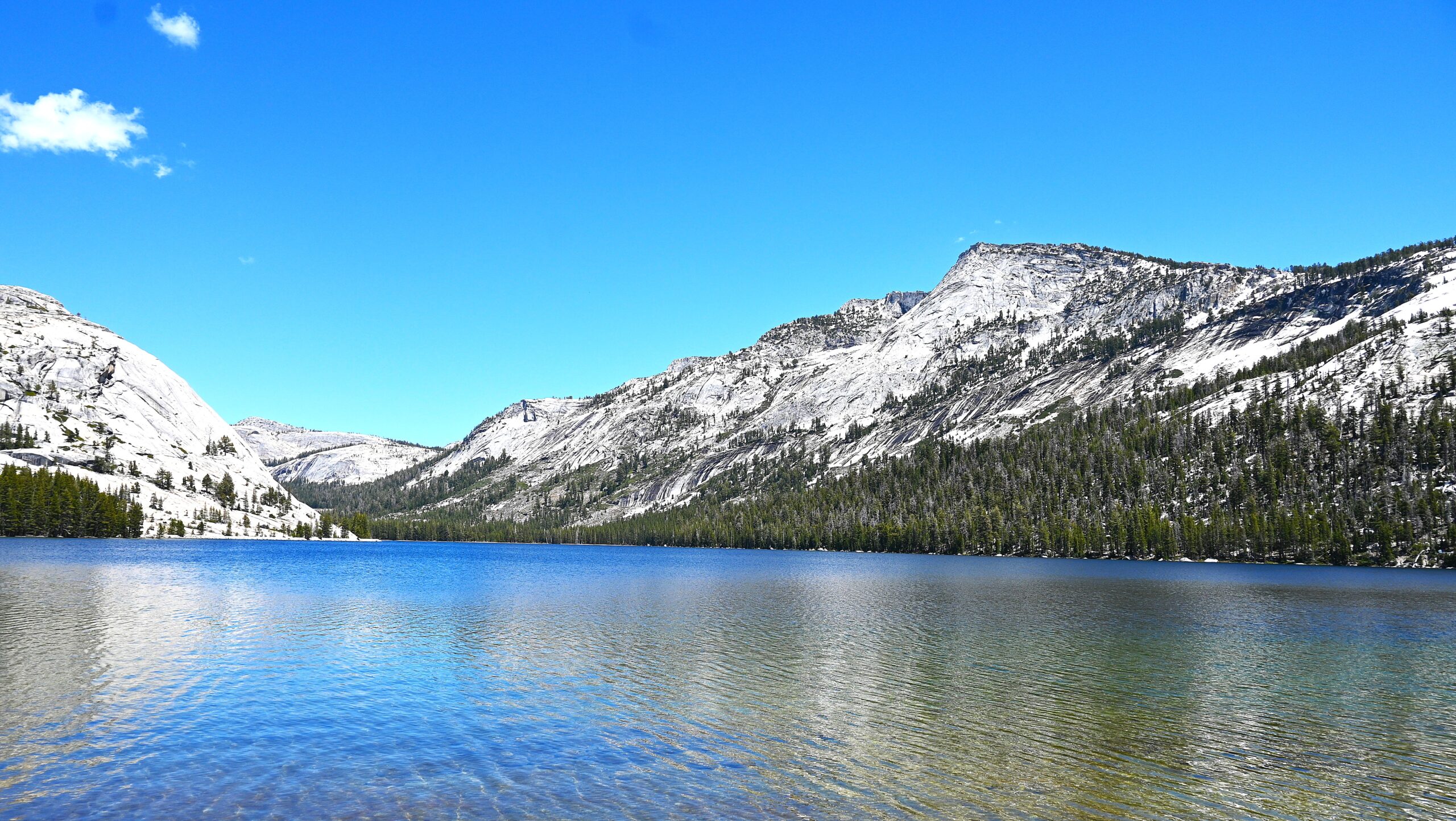
Tenaya Lake
We began the return drive as the sun dipped toward the horizon. The mountains glowed gold, and the waterfalls shimmered like ribbons of fire. The beauty was overwhelming. I pulled over, stepped out, and stood in silence, absorbing it all—the crisp, pine-scented air, the cool breeze, the vast stillness. In that moment, the trip redeemed itself.
I could understand what John Muir saw here in the late 19th century—what moved him to advocate for the protection of this landscape, efforts that ultimately contributed to the creation of the National Park Service. Nearly 150 years later, we are still living within that vision. Yet success has brought its own challenges: more than four million visitors now come to Yosemite National Park each year, making it one of the most visited parks in the country.
That night, seated outside our cabin on the outskirts of Mariposa, I looked up at a moonless sky dense with stars—more than I had seen in years. Using an app on my phone, I traced constellations across the darkness. Satellites, I knew, are being launched into orbit almost daily. I found myself wondering how long this view—this simple, ancient connection to the night sky—would remain unchanged.
If you are interested in visiting Yosemite read my Travel Guide to Yosemite (under Destination Guide in the drop down Blog Menu)