I first tasted a bánh mì sandwich at a nondescript little donut shop in a strip mall in Los Angeles. While looking through the menu posted above the modest order counter, I spotted a strange-looking sandwich made with bread that resembled a small baguette. Intrigued, I decided to order one.
“Chicken or pork?” asked the lady at the counter.
I opted for chicken.
“Chili?”
“Yes,” I replied.
When she handed me the six-inch sandwich, I didn’t expect much. I sat down at a small table and took a bite. The bread was crunchy, the meat was well-cooked and crisp, and there were flavors I had never experienced before. A remarkable combination of salty, sweet, sour, and spicy notes exploded across my taste buds. I devoured the delicious sandwich within minutes.
Ever since that day, I have been fascinated by bánh mì. How did such an unusual sandwich evolve? I knew that Vietnam had been colonized by the French, which explained the baguette, but what about the other ingredients? My research uncovered the fascinating history of this remarkable creation—a fusion of two cultures, two continents, and more than two centuries of history.
The French arrived in Indochina (present-day Vietnam, Cambodia, and Laos) in the mid-nineteenth century. They established themselves in present-day Ho Chi Minh City, then known as Saigon, on the banks of the Saigon River. Along with their soldiers, administrators, and merchants, they brought one of their most important staple foods: bread.
Wheat flour was virtually unknown in that part of Asia, where rice had been the dietary foundation for centuries. The French asserted their perceived superiority over the local population through the food they consumed. One colonial sentiment of the time was: “Bread and meat make us strong; rice and fish keep them weak.” Such attitudes were rooted in racist stereotypes and pseudoscientific theories used to justify the subjugation of supposedly “inferior” peoples.
The Western-style bread was too expensive for most Vietnamese and became known as bánh tây (“Western cake”). The French consumed long, narrow loaves similar to today’s baguettes, baked using flour imported from Europe. These were typically eaten with cold cuts, ham, pâté, cheese, and butter.
When the First World War broke out in Europe in 1914, flour became scarce as global supply chains were disrupted. Bakers in Vietnam began mixing locally available rice flour with imported wheat flour. The result was a loaf that was lighter, fluffier, and crispier than the traditional French baguette—a distinctive characteristic that continues to define Vietnamese bread to this day.
As large numbers of French colonists departed Indochina to fight in Europe, an unexpected glut of French goods entered the local market. For the first time, many Vietnamese gained access to foods that had previously been reserved largely for the colonial elite: cheese, butter, processed meats, beer, and bread. They were also introduced to tinned condensed milk and Maggi sauce, a Swiss seasoning sauce similar to ketchup. These products gradually found their way into local cuisine. Condensed milk, in particular, was added to coffee, creating the rich and sweet beverage now known around the world as Vietnamese coffee.
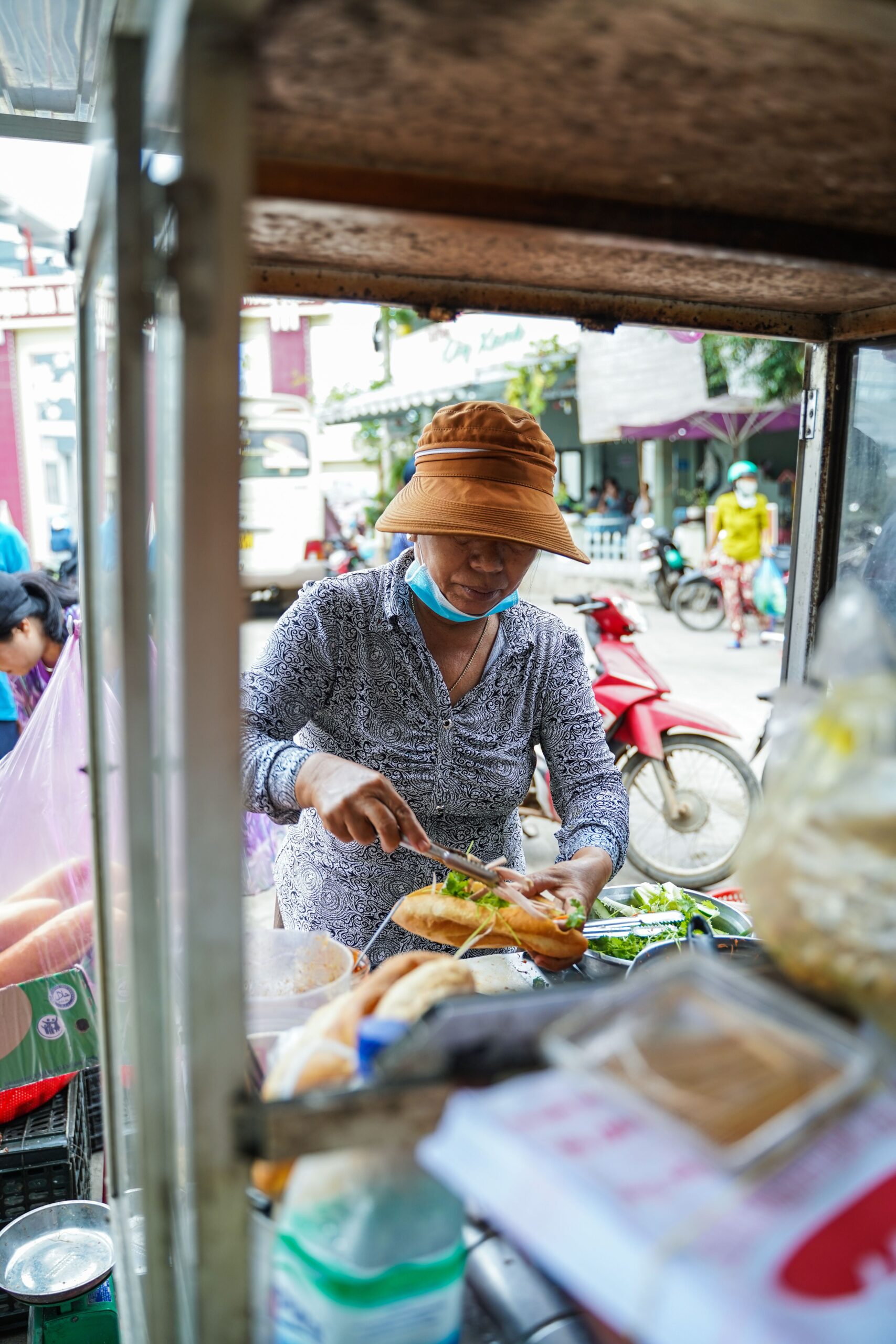
Between the two World Wars, the sandwich we now recognize as bánh mì began to take shape and evolve. Street vendors started selling homemade bread spread with butter and filled with slices of cold meat from carts and roadside food stalls. As Vietnamese nationalism gained momentum, the name changed from bánh tây to bánh mì, and butter was eventually replaced by mayonnaise.
Over time, the sandwich was refined layer by layer. The bread was split down the middle, and pâté and mayonnaise were spread generously on each side. Fillings of grilled meats—most commonly pork or chicken—were added, followed by pickled carrots and daikon radish. Finally came fresh cucumbers, sliced chili peppers, and fragrant cilantro. The result was a sandwich that became a complete meal in itself, offering an extraordinary combination of textures and flavors in every bite.
After the fall of Saigon in 1975, large numbers of Vietnamese refugees migrated to the United States, England, and other Western countries, bringing bánh mì with them. From immigrant neighborhoods, the sandwich gradually entered the mainstream. Its popularity spread across the globe, and today it is regarded as one of the world’s great sandwiches, found everywhere from Los Angeles to Melbourne and far beyond.
What began as a colonial import eventually became something entirely new—a uniquely Vietnamese creation born from history, necessity, adaptation, and cultural exchange. Crispy French bread, Vietnamese ingenuity, and a dazzling combination of flavors transformed a simple sandwich into a culinary icon enjoyed around the world.
Today, whenever I bite into a bánh mì, I taste much more than bread, meat, and vegetables. I think about the long journey that brought it into existence: French colonists carrying their baguettes to Southeast Asia, Vietnamese bakers reinventing them with rice flour, street vendors refining the recipe, and refugees introducing it to new corners of the world. What seemed like a simple sandwich in a small Los Angeles donut shop now feels like a living piece of history. Every crunchy bite tells a story of resilience, adaptation, and cultural exchange. And perhaps that is the secret of bánh mì’s enduring appeal—it is not merely food, but a reminder that some of the world’s greatest creations emerge when different cultures meet, borrow from one another, and create something entirely new.