A Layover That Changed Me: Finding Myself in China
Many years ago, before we were all carrying a computer in our pockets—aka the smartphone—travel was very different. I had to make a last-minute trip to India from the U.S., and on the cheap. The ticket I found was from Los Angeles to Shanghai with a 12-hour layover, then a three-and-a-half-hour flight to Kunming in southern China with a 24-hour layover, followed by a four-hour flight to India. Even though the total travel time was over 36 hours, I jumped at it because it gave me the chance to see a bit of China without spending a lot.
After I bought my ticket, I realized that I needed a transit visa for China. My earlier research had shown that I would not need a visa to transit through Shanghai, but because my stay in Kunming exceeded 24 hours, I needed one.
I drove to the Chinese consulate in midtown Los Angeles. The streets around the consulate were closed by the LAPD because there was a large demonstration in front of the building organized by a group called “Free Tibet.” I parked several blocks away and walked to the consulate, pushing my way through crowds carrying placards and shouting slogans, only to be told by security outside that the building was closed for the day.
So I went back the following day. After paying a hefty parking fee, I made my way to the consulate, only to find a long line. I had to fill out a lengthy form, attach two passport photos, a copy of my ticket, and a hotel reservation in Kunming, and pay the requisite fee in cash. I stood at the end of the line, and it took over three hours before I reached the counter. The woman behind the glass went through my application and looked up at me.
“That’s a lot of trouble for one day. You should have spent a few days in Kunming. It’s beautiful!”
I shrugged.
She told me to come back in three days to pick up my passport with the visa stamp.
So I had to go back a third time.
In Shanghai, I was amazed by the large and beautiful airport. Going through immigration was a breeze, and I walked out of the terminal into a beautiful sunny day. I found two trains that left every few minutes for downtown. The policemen were friendly and showed me where to purchase tickets and board the train. I opted for the train that glided on tracks by magnetic levitation. The clean and comfortable train was quiet and smooth as it flew along dedicated tracks above the streets. I looked out the large windows at the shimmering skyline—glistening skyscrapers as far as the eye could see.
I got off near the famous Bund and walked to the riverbank. Beautifully restored European buildings lined the wide street on my side, and across the river rose the most incredible skyscrapers I had ever seen. I walked along the promenade, had lunch, and spent a few hours there before heading back to the airport.
The flight to Kunming departed from a different part of the airport, at one end, and was quite shabby compared to the slick and shiny sections I had seen earlier. There were no duty-free shops, no restaurants, but lots and lots of hot-water taps. I couldn’t figure out what they were for. As I headed toward my gate, it became more and more crowded, with families squatting on the floor because all the seats were taken.
When I saw a woman walk up to a hot-water dispenser carrying half a dozen paper containers of instant noodles, I finally realized what they were for. Families were loud, talking and busy slurping up noodles from paper containers with chopsticks, while kids ran around the terminal playing their own games.
It had been several hours since my excellent meal at the Bund, so I followed the locals and picked up a container of instant noodles from a small store. I added boiling water and ate them clumsily with chopsticks, as no forks were available.
The flight was uneventful, but as soon as we landed, people jumped up and began pulling luggage from the overhead bins even while the plane was taxiing. The flight attendants kept shouting over the PA system, presumably for everyone to sit down. The mad rush for the exit continued as soon as the gate was opened. My luggage was the last to arrive, and when I stepped outside, there was a single person standing outside the terminal. It was after midnight, and though bright lights shone everywhere, the surroundings were eerily empty and silent.
“Taxi?” the man asked with a smile.
I looked around for a policeman or a taxi booth, but there was nothing open and no one around. I was exhausted. I showed him the name of my hotel from the printed reservation I had brought with me, and he gestured for me to follow him to his car. It was a regular car, with no taxi signs and no meter. He quoted me a price in the local currency, and having no choice, I accepted. I later realized he had overcharged me—about four times the normal fare—since my hotel was only a few kilometers away.
The hotel, a stunning glass high-rise with a revolving restaurant on top, stood on a wide thoroughfare and was completely empty except for one woman at the reception desk. She looked at my reservation, then picked up a paper sign that read, “Passport and Credit Card, please.” She checked me in, handed me my room key, and gestured how to get there using the elevators off the lobby. Before I left, she showed me another sign in English: “The English-speaking receptionist will be here in the morning.”
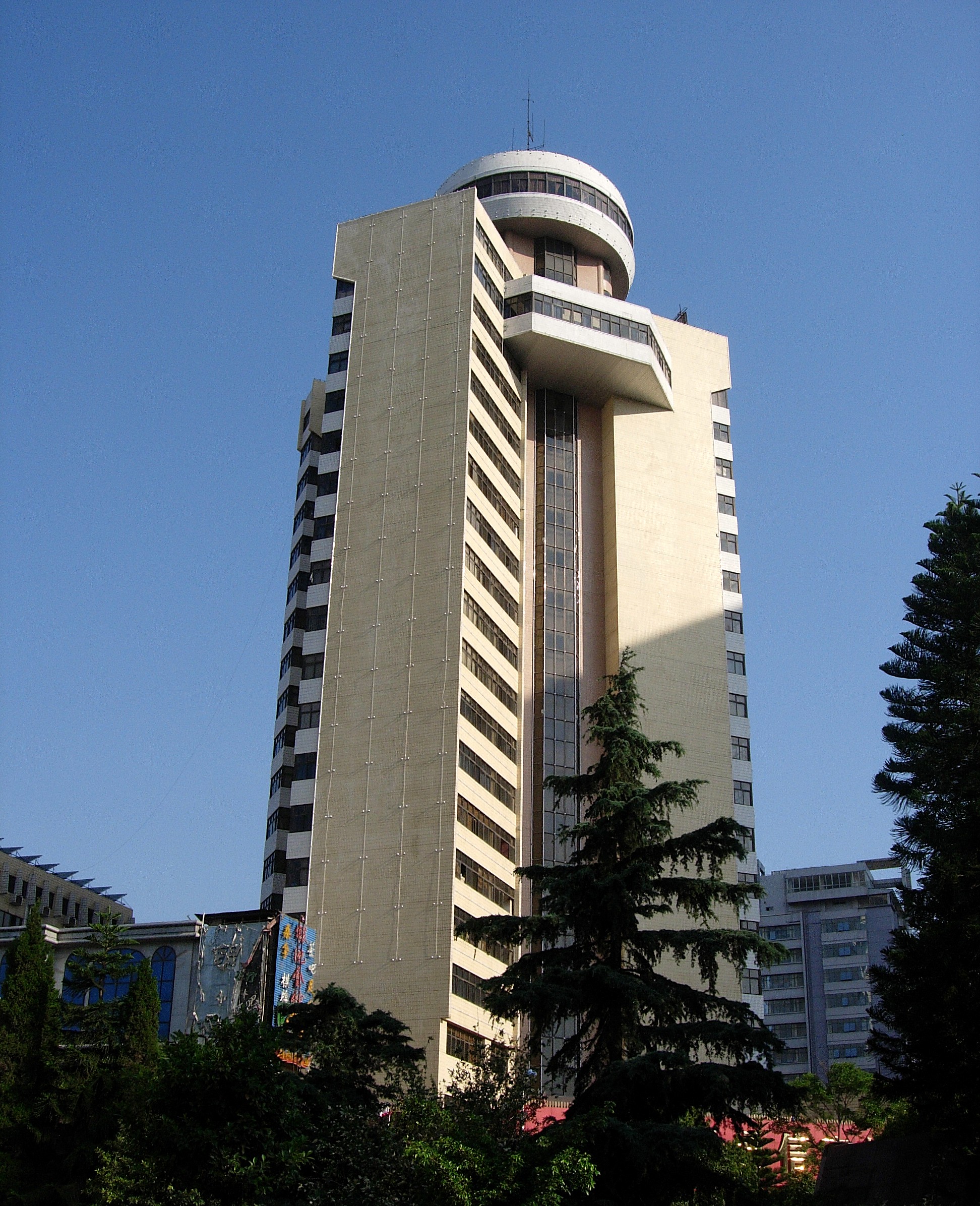
My hotel in Kunming, China
I went to my room, took a hot shower, and crashed. The room was large, very clean, well furnished, quiet, and had a nicely appointed bathroom. I slept like a log.
The next morning, I was famished. I knew breakfast was included, and as I headed to the lobby, I saw a sign pointing to a restaurant with the word “Breakfast” written in English. I was greeted at the door, seated, and enjoyed a sumptuous meal with multiple options ranging from dim sum to Western-style omelets.
My plan was to go on a city tour that day, especially to visit a famous bamboo temple and, if possible, a nearby national park. I went to the reception desk, but no one there spoke a word of English. After much gesturing, I realized the English-speaking receptionist had not come in that morning.
I noticed a large group of Westerners sitting on sofas in the lobby with their luggage, listening intently to a guide speaking English. I walked over and realized, with relief, that it was an American tour group. I approached an elderly couple and asked, “Hi, good morning. Do you know how you plan to see the town? Can I join you?”
The man looked at me incredulously and asked his wife, “Honey, what country are we in?”
Then he turned back to me and said, “We’ve been traveling for over two weeks through Cambodia, Vietnam, Laos, and some other countries, and I’m not even sure where we are. Why don’t you ask our tour guide over there?” He pointed to the young Asian man still speaking.
I waited politely until the guide finished and asked, “Sir, can you help me arrange a city tour or refer me to a local agency?”
He looked at me with astonishment. “You’re not part of this group. I can’t help you. Go outside and look.”
So I stepped outside and wandered around. The street behind the hotel was much narrower and filled with shops and restaurants. Women rode scooters holding umbrellas in their left hands to shield their faces from the sun while steering with their right. I couldn’t find a single person who spoke English or any travel agencies. Eventually, I walked back into the hotel.
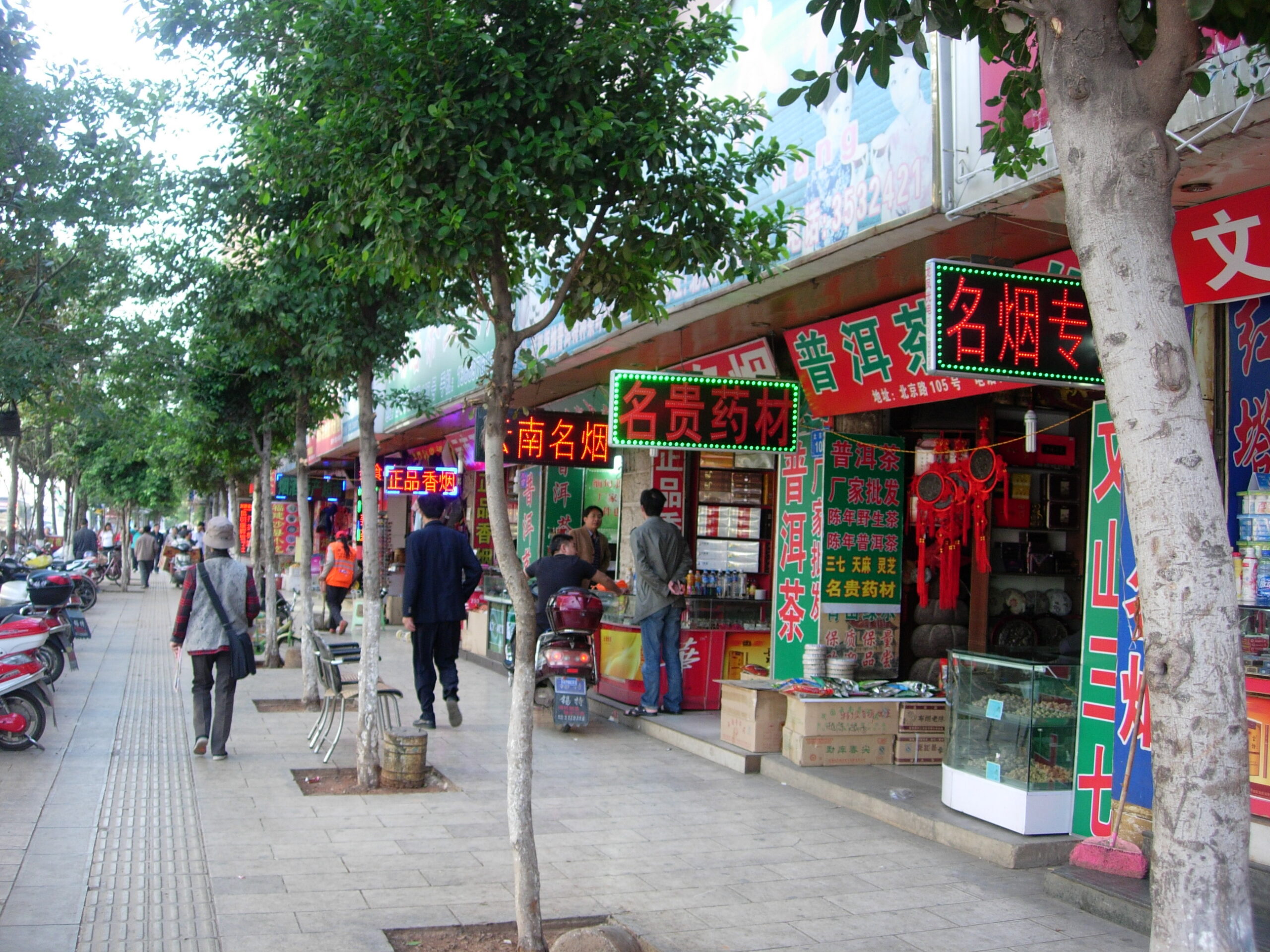
The colorful streets of Kunming, China where no one spoke any English in the 90’s
I pulled out a photocopy from a Fodor’s guidebook of the temple I wanted to see and showed it to the receptionist. She studied it intently, showed it to a colleague, and finally returned. She wrote something in large Chinese characters on a piece of paper. Pointing to my photocopy, then to the writing, and finally toward the street, I understood that she wanted me to stand outside and show the paper to taxi drivers.
So I stood on the sidewalk of the wide street holding the paper with both hands. Curious passersby stopped to read it and stare at me before walking away. Taxi drivers—mostly women wearing large sun visors—stopped, read the sign, shook their heads, and drove off.
After an hour, I was ready to give up when a young man walked up, took the paper from my hand, and read it. With a wide grin, he nodded and pointed to his scooter parked nearby.
I opened my palms upward in the universal gesture for “How much?” He pulled out his wallet, showed me some local currency (renminbi), and held up five fingers. I did a quick conversion and realized he wanted about $100. The hotel’s security guard had come over and was watching intently. When he saw me agree, he shook his head in disapproval.
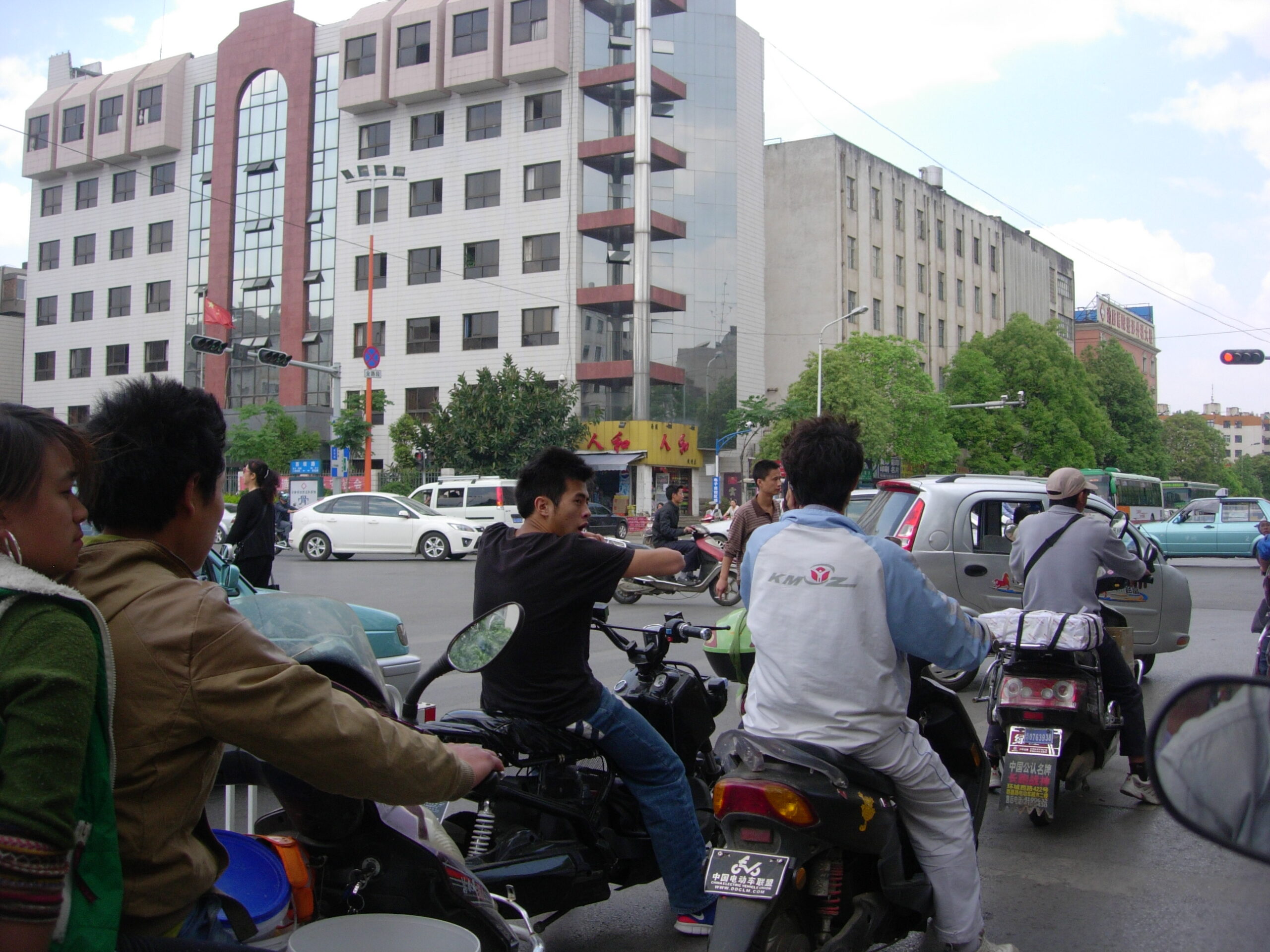
Scooters waiting at a busy crossing, Kunming, China
Against my better judgment, I paid my young guide and climbed onto the back of the scooter, my heavy backpack containing my laptop and SLR camera strapped tightly on. I held onto his back and the small handle as he sped off, weaving through traffic before entering a narrow lane meant for two-wheelers. We raced alongside hundreds of scooters for about ten minutes before suddenly turning off.
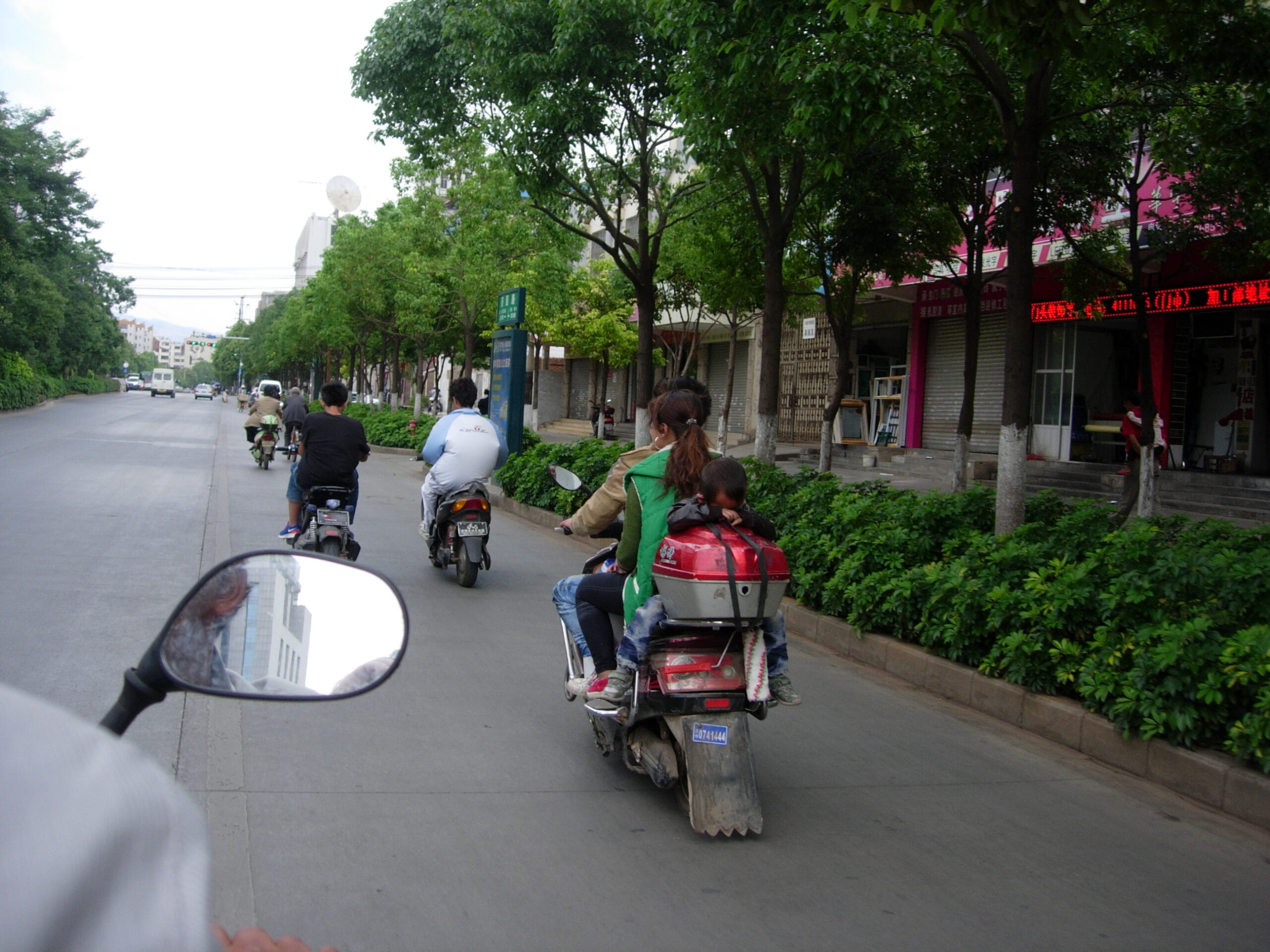
Scooters rushing through the streets in Kunming, China
Within a few blocks, the scenery changed dramatically. The road narrowed, open sewage drains appeared on both sides, and the houses became smaller and more rundown until they were little more than tin-roofed shacks. I began to feel nervous.
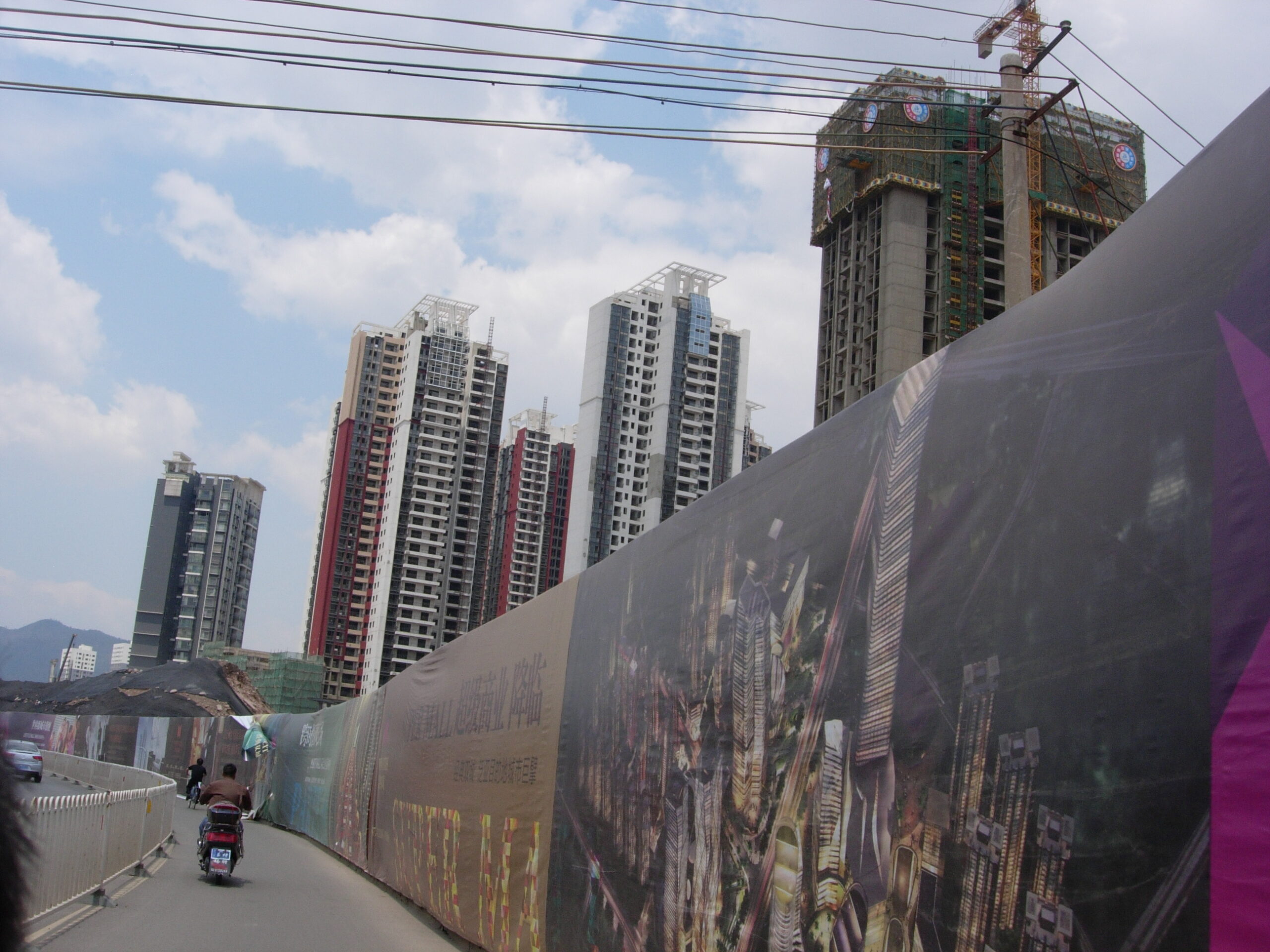
‘Scooter Freeway’ Kunming, China
I tapped him on the back and asked where we were going, but I couldn’t understand his response. He stopped in front of a ramshackle hut and gestured for me to get off. Six or seven young men sat at a makeshift table drinking foul-smelling liquor and gambling with cards. They waved and smiled as I dismounted. Older women and the men stared at me. I felt a chill run down my spine.
I silently prayed. I was carrying my U.S. passport, cash, credit cards, a laptop, and a camera. I was convinced I would be robbed—or worse—and disappear into a remote slum in southern China. My entire life flashed before my eyes like a movie in which I was the unwilling star.
My guide unlocked a rusty metal door and motioned for me to follow him inside. With no other option, I did. The room was small, windowless, and barely ten by ten feet. He pointed to his wooden bed, asked me to sit, then picked up a battery and gestured for me to follow him outside. He swapped the battery on his electric scooter.
Relief washed over me, followed by embarrassment. He had brought me home only to change batteries because the temple was far away. As we drove off, the men and women waved goodbye. I felt ashamed of my mistrust.
We rode to the outskirts of the city, where densely forested mountains began. He pointed toward a hill, and I knew that was our destination. The road climbed steadily, but after a kilometer the scooter sputtered and died. He pushed it uphill, and I followed under the blazing sun. After an exhausting hour, we reached the temple gates—only to find them closed.
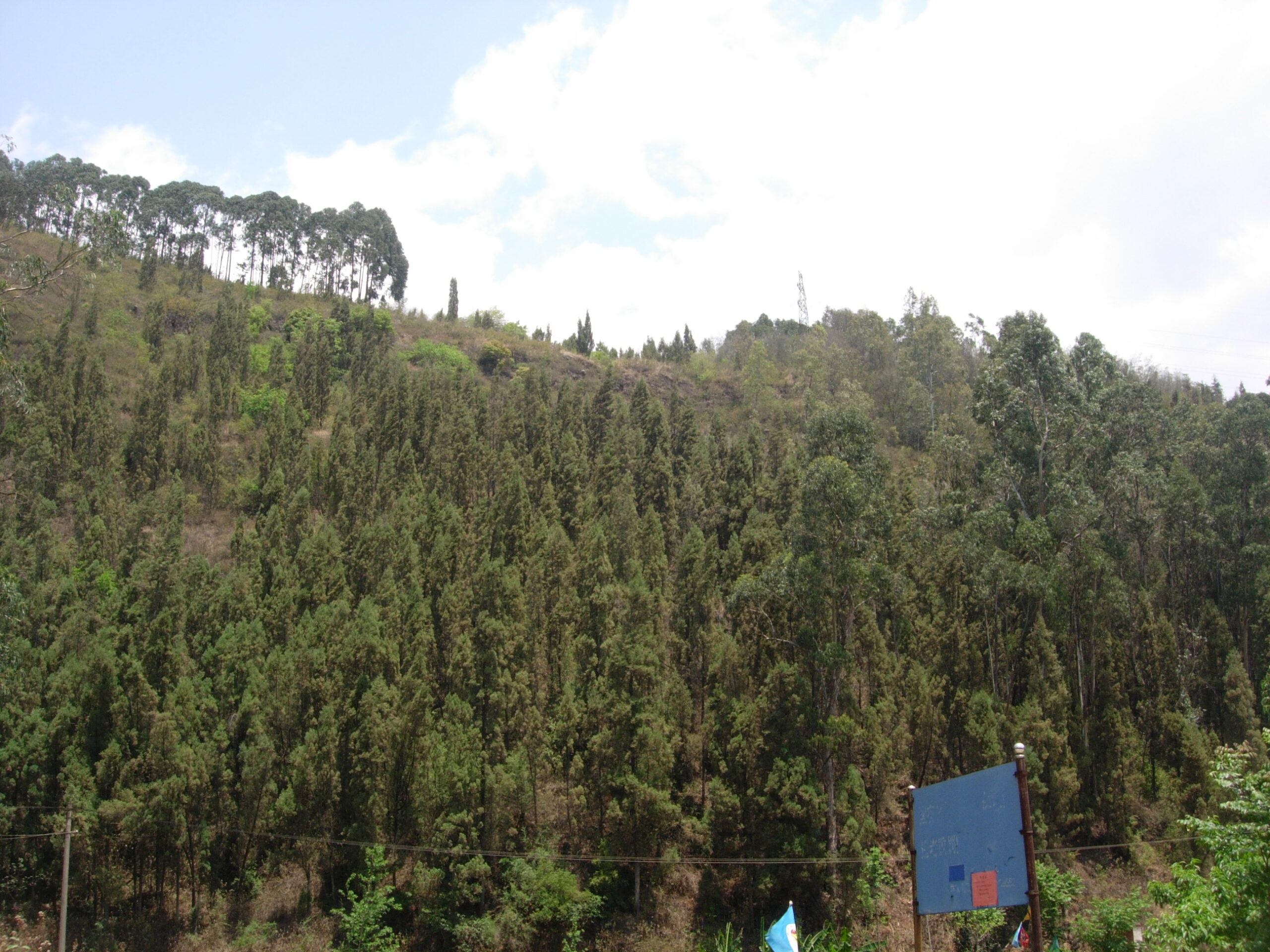
Forests and Hills on the outskirts of Kunming, China
He spoke to the stall owner nearby, bought two bottles of cold water, handed me one, and gestured for me to get back on the scooter. The ride downhill was exhilarating. Cool mountain air rushed past, and I finally noticed the lush greenery, cascading streams, and towering trees. It was a peaceful 45-minute ride back to the hotel.
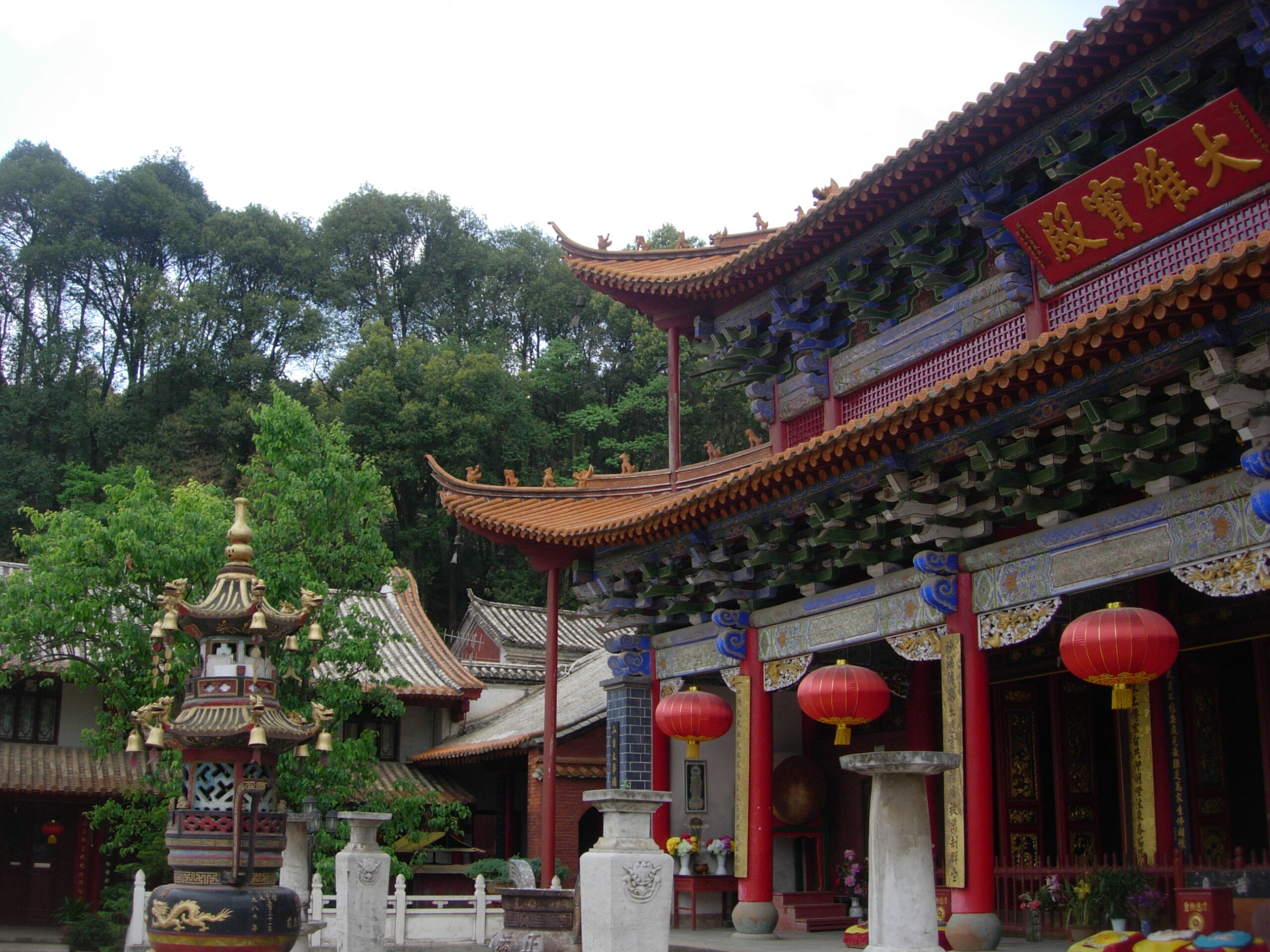
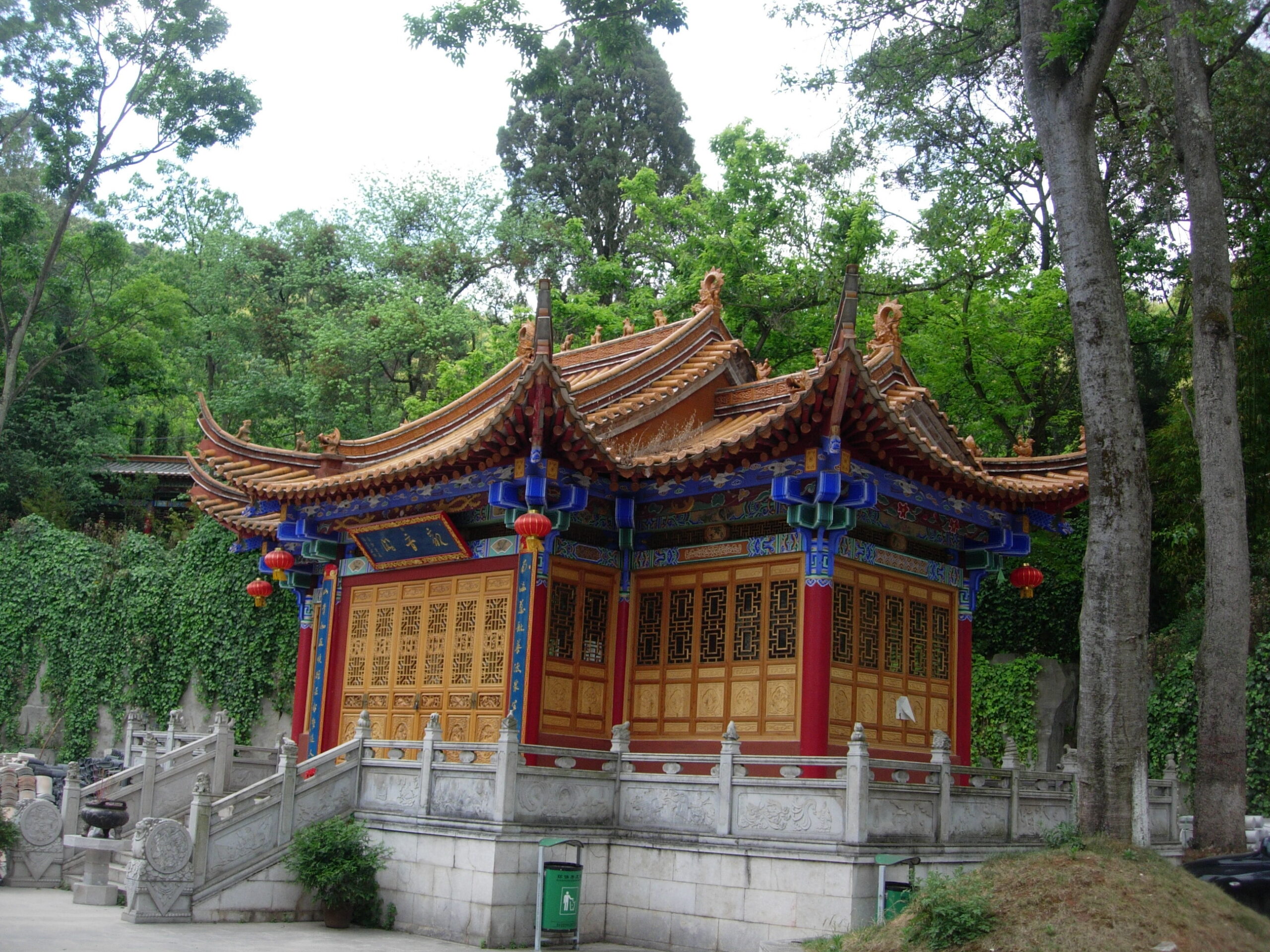
Beautiful Buddhist temple that I got to see only from the outside, Kunming, China
My new friend hugged me goodbye. I collected my luggage, found a taxi to the airport, and made my flight. On the plane, I reflected on how easy it is to misjudge people, especially those who seem different. I came away with a deeper appreciation that, despite our differences, most people are kind at heart and willing to help a stranger. I wish there had been a way to stay in touch with my new friend, as I would have loved to return the favor by showing him around my hometown of Los Angeles.
Today, with translation apps, maps, and instant data, this journey would have been easy. But while technology has made life more certain, it has also made it far less exciting.