Pyramids, Skyscrapers, Castles and outstanding food just south of the border

Palacio de Bellas Artes (Palace of Fine Arts)
If you still haven’t been to Mexico City, you don’t know what you are missing. There is much more to the country than the popular touristy beach resorts. Mexico City, the capital, is the largest city in North America, the second-largest in the Americas (after São Paulo, Brazil), and the longest continuously inhabited city in the New World. The city is a captivating mix of cultures, history, topography, and cuisine. Where else in the world can you see pyramids, European-style castles, and fine art, and also dine at one of the world’s best restaurants—all in the same day? Here are my recommendations for a trip south of the border.
First, a quick history lesson. The origins of Mexico City date back to 1325, when it was founded as Tenochtitlan in the middle of Lake Texcoco by the Aztecs. According to legend, the Aztecs were instructed by their sun god to build a city where they saw an eagle perched on a cactus eating a snake—a scene that now appears on the Mexican flag. Upon seeing this image at the lake, they built their city: a floating metropolis with canals and causeways. When Spanish conquistadors led by Hernán Cortés arrived in 1519, they were astounded to find a city more beautiful than any in Europe, including Venice. The Spanish conquered the city in 1521 through a combination of unfamiliar infectious diseases, stealth, and brutal force. The city was destroyed, the lake drained, and a new city was built atop the ruins—often using stones from demolished temples to construct Catholic churches.
Since then, Mexico has had a tumultuous history. The Mexican War of Independence lasted from 1810 to 1821, followed by the Mexican-American War in 1848, during which the country lost nearly half its territory to the USA. Much of the American Southwest, including California, was part of Mexico before 1848. The country endured civil wars, a brief period of French rule, and the Mexican Revolution between 1910 and 1920.
This complex history is reflected in its people. Most Mexicans are considered mestizos (of mixed Spanish and Indigenous descent), though many Indigenous groups—especially in the southern regions—continue to thrive and speak their own languages. There are also smaller but significant populations of Afro-Mexicans, Asians, and Middle Eastern immigrants.
Mexico City sits in a high-altitude valley over 7,200 feet above sea level, surrounded by mountains, and enjoys a temperate climate that makes it a year-round destination. Though vast, the best areas for tourists are the upscale neighborhoods near Chapultepec Park: Polanco, Roma Norte, Condesa, and Colonia. Chapultepec Park itself is one of the largest urban parks in the world, spanning more than 2,000 acres.

View of city from Chapultepec Castle
I recommend beginning your first day with a walk through Chapultepec Park. Head to Chapultepec Castle. Buy a ticket (around $4.50) and walk up the scenic uphill path to the entrance. The views of the city, with Reforma’s skyscrapers and the surrounding mountains, are stunning. The castle, though relatively small, was built and briefly inhabited by Maximilian I of Austria between 1864 and 1867, when he was declared Emperor of Mexico by the French. The beautifully preserved castle features ornate rooms, artwork, decorative ceilings, and carriages used by the royal family. The views from the balconies are spectacular.
After visiting the castle, take a break for lunch and then head to the National Museum of Anthropology—one of the finest museums in the world. Allow at least 3–4 hours to explore its outstanding and diverse exhibits, which span pre-Columbian civilizations through the Mayan and Aztec eras. It is among the best museums I have ever visited, and I highly recommend it. Be sure to buy your ticket online in advance (around $4), especially if you plan to visit on a weekend or holiday.

Exhibit at the Anthropology museum
In the evening, explore the vibrant streets of Polanco or stroll along Avenida Reforma before heading to dinner. Mexico City boasts some of the world’s best restaurants, including two (Pujol and Quintonil) ranked in the global top 10. After dinner, if you still have energy, consider heading to a rooftop lounge, nightclub, or bar to experience the city’s dynamic nightlife.

Well plated dish at 3 Michelin star rated Pujol

View of the city at night from a rooftop bar
The next day, plan a visit to the incomparable home of Frida Kahlo. Tickets to the Casa Azul (Blue House) in the charming neighborhood of Coyoacán sell out quickly, so book online well in advance. Although it contains little of her artwork, the museum offers a poignant look into her complex and tragic life. The ticket also includes access to the nearby Anahuacalli Museum, designed by Diego Rivera to resemble an Aztec pyramid. Allow around three hours for both sites. Afterward, head to the Zócalo, the city’s historic center.

The Zocalo
The Zócalo is one of the largest public squares in the world and features the Metropolitan Cathedral, which was built atop the Aztec Templo Mayor. Part of the ancient temple has been excavated and is on view. To the right of the cathedral is the National Palace, which houses Diego Rivera’s famous murals. I recommend visiting the cathedral first, followed by the Templo Mayor ruins, and finally the palace. When you’re ready for a break, head to Balcón del Zócalo, a rooftop restaurant offering excellent food and unbeatable views of the square.
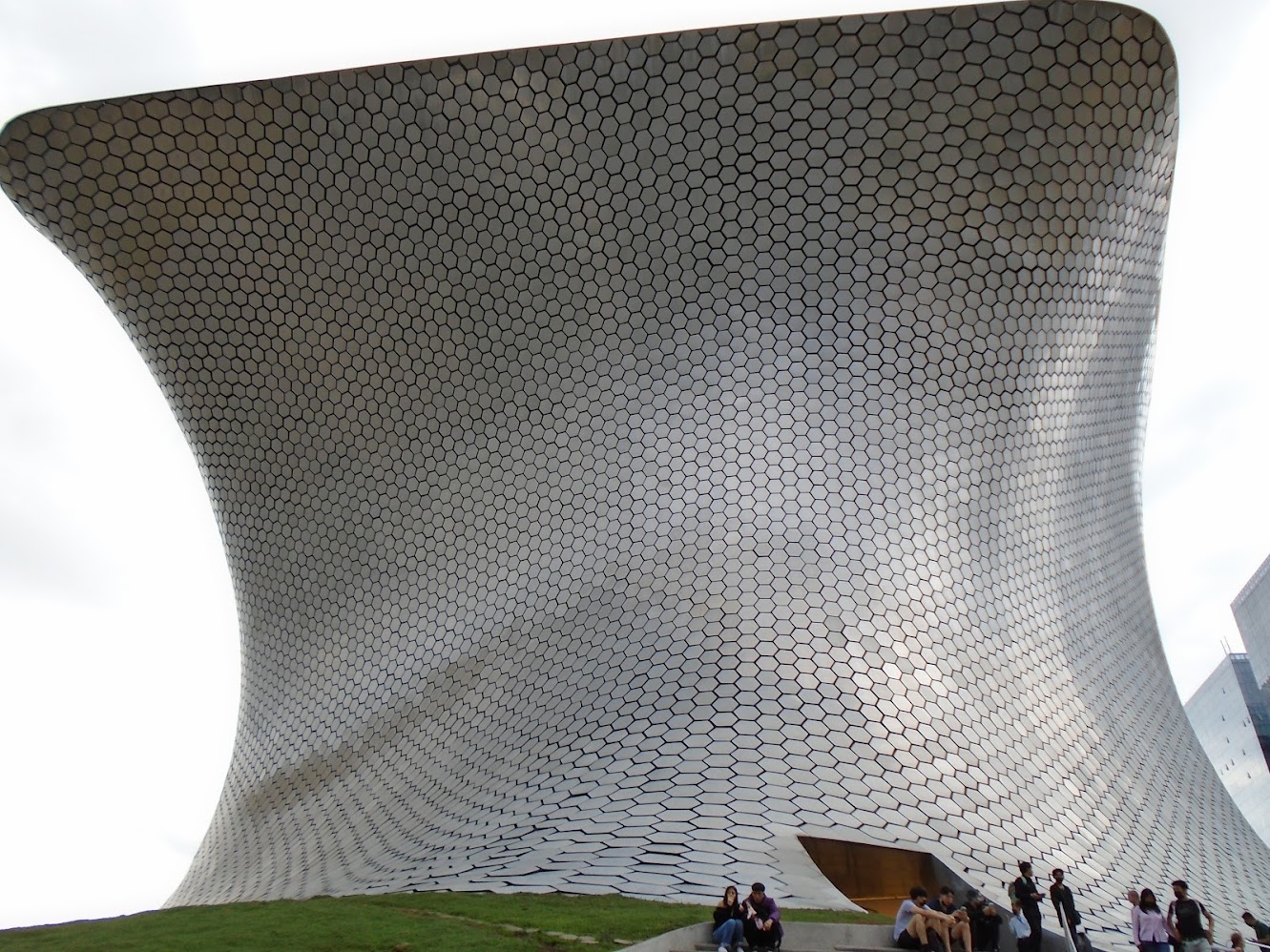
Mexico City has more museums (150+) than any other city in the world. Other than the ones mentioned above, the ultramodern Soumaya Museum founded by billionaire Carlos Slim is free and excellent. Other museums worth a visit are: Jumex Museum, Folk Art Museum, Palacio de Bellas Artes (Palace of Fine Arts) and the Museum of Modern Art.

Soumaya museum
The following day, book a guided tour to the pyramids of Teotihuacan, about an hour north of the city. This massive archaeological site, dating back to 1 AD, is dominated by the towering Pyramids of the Sun and Moon, along with many smaller structures. Plan to spend half a day exploring the area. On your return, stop at the Basilica of Santa María de Guadalupe—Mexico’s holiest site. The modern basilica stands beside the original one, and a short walk up the hill provides sweeping views of the city.

The pyramid of the sun, Teotihuacan
Don’t miss Xochimilco, a UNESCO World Heritage Site and the last remnant of the Aztec canal system. Here, you can rent a brightly colored boat and cruise the canals while enjoying beer and snacks from passing boats. Though somewhat kitschy, it remains popular with locals and offers a unique glimpse of pre-Hispanic city life.

Colorful boats in the canals of Xochimilco
Soccer fans should make time for the legendary Azteca Stadium, which hosted two FIFA World Cup finals: in 1970, when Pelé led Brazil to victory, and in 1986, when Maradona did the same for Argentina. Check with your hotel to see if there’s a match during your stay and secure tickets to experience the thrill of a game alongside over 85,000 passionate fans.
Apart from the fancy restaurants, the street food in the city is outstanding—among the best in the world—ranking at the top with Bangkok and Singapore. Don’t miss shopping at the artisanal markets for unique local handicrafts. The two best are La Ciudadela and the Artisan Market in Coyoacán.
There’s so much more to see and experience in this extraordinary city. Like many others, it has areas of poverty and others of remarkable affluence. This is where Gabriel García Márquez wrote One Hundred Years of Solitude, where Octavio Paz penned poetry, where Fidel Castro met Che Guevara, and where Leon Trotsky was assassinated after being exiled by Stalin. The city’s atmosphere is charged with history, creativity, and energy—it is truly one of the world’s great capitals.
Mexico City is generally safe, in spite of all the negative publicity, especially in the tourist areas, but general precautions are recommended as in other big and crowded cities. It’s best to use Uber, licensed taxis, or cars arranged through hotels or travel agencies. The metro system is excellent and efficient, and many of the sites mentioned above are easily accessible by train.
There are direct flights to Mexico City from most major U.S. cities. For those who might want to see more of the country, consider flying to Cancun and staying in a smaller resort town further south (Playa del Carmen or Tulum). These towns have Caribbean-like scenery and beaches with a unique local vibe. A trip to the nearby Mayan city of Chichen Itza is a must. The city, built between 600 and 1200 AD, is home to one of the largest and best-preserved Mayan pyramids in the world: the Temple of Kukulcan. This four-sided step pyramid towers to a height of 100 feet.
The USA and Mexico share a lot more in common than we think. So, the next time you plan a short trip out of the country, consider a few days in the unique and fascinating country of Mexico.

2 responses to “Why Mexico City Should Be on Every Traveler’s Bucket List”
Estaba un poco familiarizado con esta publicación y me dio una idea clara y brillante.
Gracias.