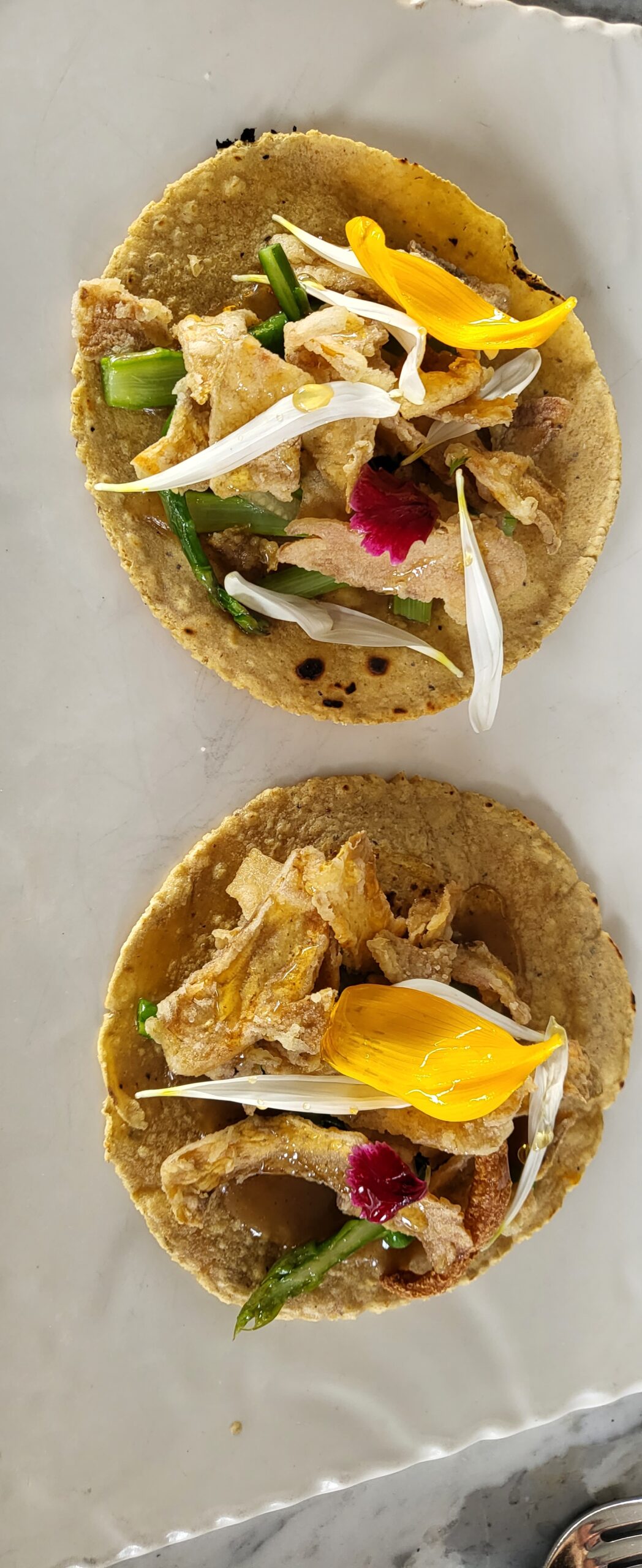
How a humble Mexican street food became a symbol of innovation, identity, and cultural fusion
Greater Los Angeles, a city of over 18 million people, boasts more than 5,500 Mexican restaurants that serve tacos — roughly one restaurant for every 3,200 Angelenos.
And that’s not even counting the estimated 10,000 roadside food vendors (street vending became legal in California in 2023) and more than 4,000 food trucks. Add it all up, and there’s roughly one taco joint for every 900 residents.
This staggering number dwarfs the places churning out burgers and pizzas — longtime staples of the American fast-food diet. Even many national burger chains now serve tacos, burritos, and other Mexican-inspired fare. So, how did the taco take over?
People in Mexico have been eating fish, meats, insects, vegetables, or beans wrapped in corn tortillas for over a thousand years. The word taco is thought to have originated with Mexican silver miners in the late 18th century. They used small paper wrappers to hold gunpowder charges that were stuffed into holes in rock for blasting.
Around the same time, miners were buying meat or beans wrapped in soft corn tortillas from food vendors. These came to be known as tacos de minero — “miners’ tacos.”
Another theory suggests the term comes from the Nahuatl word tlahco, meaning “in the middle.” Whatever the origin, the word began to gain wide usage in the late 18th century.
As industrialization accelerated in the late 1800s, Mexico City saw an influx of laborers from across the country. Working-class neighborhoods sprouted taquerías, and women brought their regional cooking skills to the capital, turning the city into a melting pot of what we know today as Mexican food.
Mexican-American miners and railroad workers carried the taco north into the United States in the early 1900s. At the time, Mexican food was considered “lower class,” often sold by women pushing carts through Los Angeles and San Antonio.
These women became known as the “Chili Queens.” Sampling their spicy food was, for many, a safe way to flirt with the perceived danger of Mexico — then thought of as a wild and unpredictable place.
The Chili Queens themselves were often sexualized, described as “available” and “slightly dangerous,” which made them popular among thrill seekers — but without too much risk.
By the 1910s and 1920s, the children of those early immigrants started adapting tacos with American ingredients — ground beef, cheddar cheese, lettuce, and tomatoes. These hybrid creations bridged two culinary worlds and made tacos more accessible to mainstream American palates. Meanwhile, in Mexico City, Lebanese immigrants introduced vertical spits for shawarma and gyros, which locals called tacos árabes. This innovation eventually gave rise to the now-iconic al pastor taco, featuring marinated pork and pineapple, cooked on a vertical spit.
These early adaptations set the stage for the commercialization and mainstream popularity of the taco, which would take off in the post-war era.
The real explosion of taco culture in the U.S. can be traced to a businessman named Glen Bell.
In 1948, Bell started with a humble hot dog stand but quickly became fascinated by the tacos he tried at a nearby stand run by his Mexican neighbors. He learned their techniques and opened Taco Tia in San Bernardino, California in 1952.
Expansion was rapid, but scaling the business proved difficult. Fresh corn and flour tortillas had a short shelf life, limiting production. Bell then discovered the secret of fried “hard shells” from the family recipes of chefs at Mitla Café, a beloved local Mexican spot — though he later falsely claimed that he had invented the technique himself.

In 1962, Bell launched his new restaurant, Taco Bell, in Downey, California, introducing the fried hard-shell taco filled with seasoned meat, chopped lettuce, diced tomatoes, shredded cheese, and salsa. The concept took off, fueled by a groundbreaking franchise model.
By the time he sold the company to PepsiCo in 1978, there were more than 800 Taco Bell locations. Today, there are over 8,200 outlets worldwide, in places as far-flung as India, China, Europe, and Australia.
Taco history made another leap when the Michelin Guide awarded a coveted star to a humble street stall in Mexico City: Taquería El Califa de León. This family-run stand, more than 60 years old, has become legendary for its simple but perfect offering: a warm, handmade corn tortilla topped with a single piece of grilled meat (beef or pork), served with a wedge of lime and a choice of two sauces — red or green.
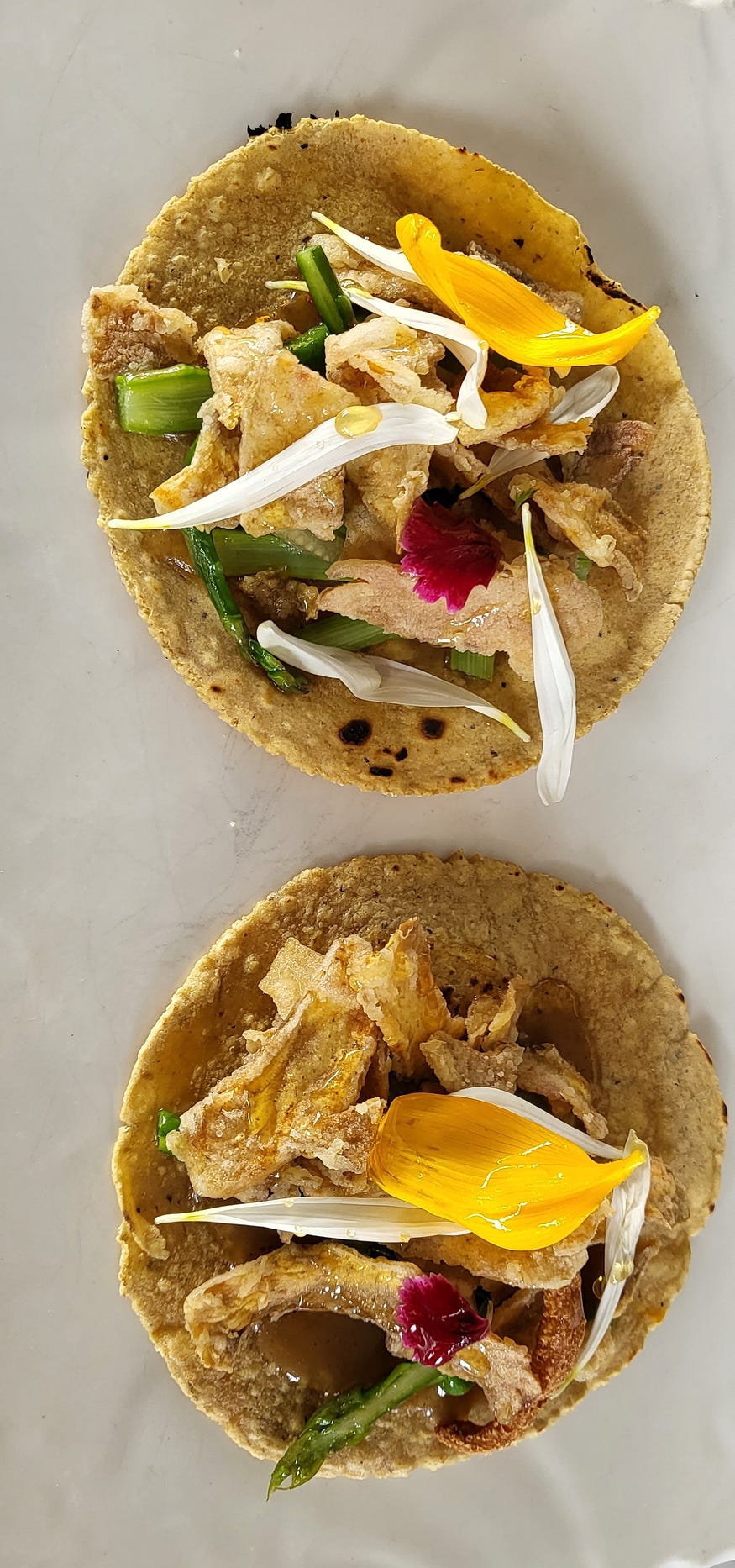
The line outside never seems to end. Mexico City, of course, is also home to fine-dining giants like Pujol and Quintonil, both ranked among the world’s top ten restaurants — and yes, they too serve tacos.
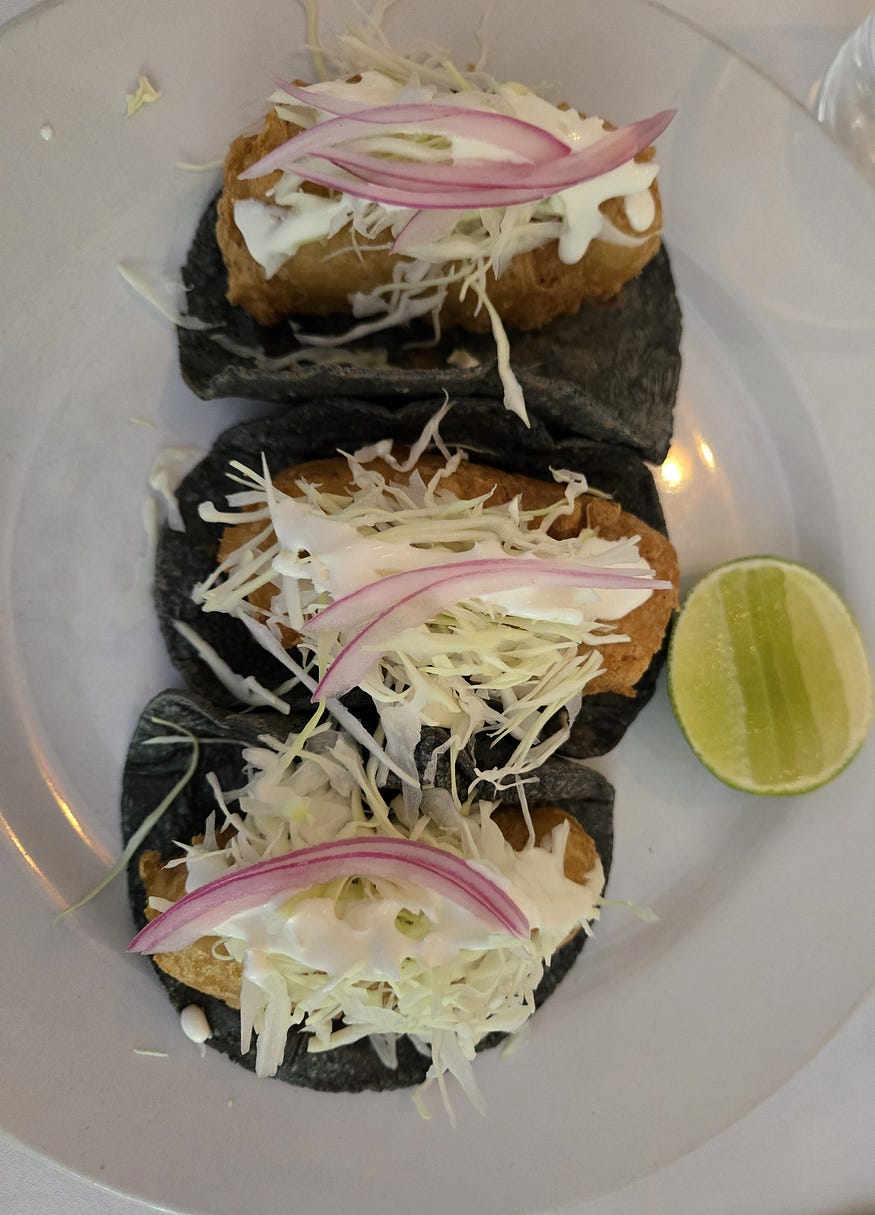
I had my first taco while in college in Los Angeles. That simple dish checked every box: a fresh tortilla, tender and juicy meat, and a spicy, savory salsa that tied it all together. Over time, my tastes expanded. I developed a love for seafood tacos — especially the Baja-style kind, with crispy battered fish or shrimp, topped with cabbage slaw and pico de gallo.
I also enjoy vegetarian tacos filled with cheese, potatoes, and peppers. Each variation offered something new while staying true to the form’s essence: balance, texture, and boldness.
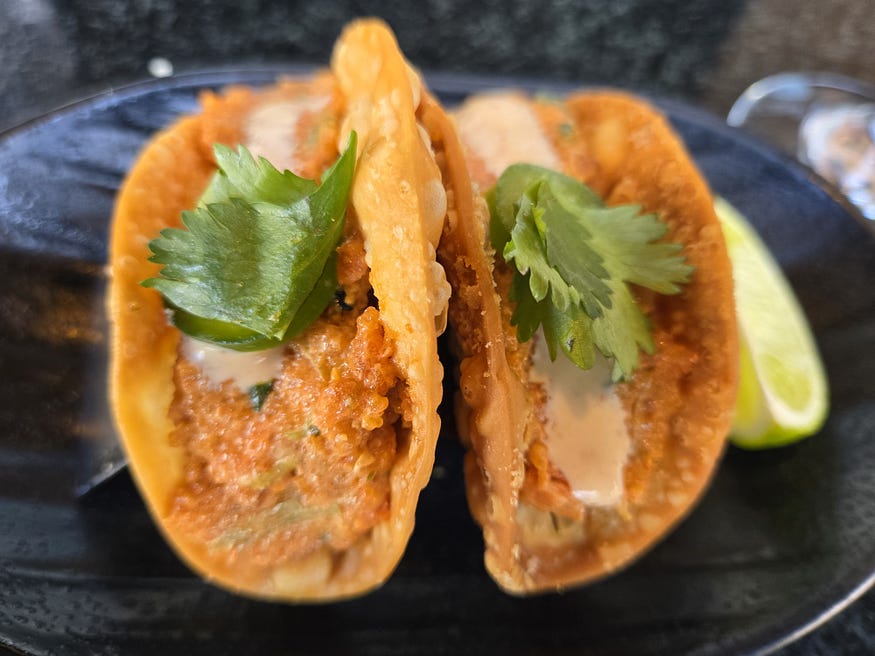
In Los Angeles, young Korean-American chef Roy Choi started the gourmet food truck movement with his Kogi truck, churning out mouthwatering Korean tacos. Meanwhile, other local Mexican-American chefs introduced their interpretations of tacos through acclaimed restaurants — from the braised meat tacos at Guisados to the thin Sonora-style tortillas at Sonoratown.
Other local taquerías that have cult-like followings include Tacos 1986, Mariscos Jalisco, Teddy’s Red Tacos, and the Michelin-starred Holbox, justly famous for its Yucatán-style seafood tacos.
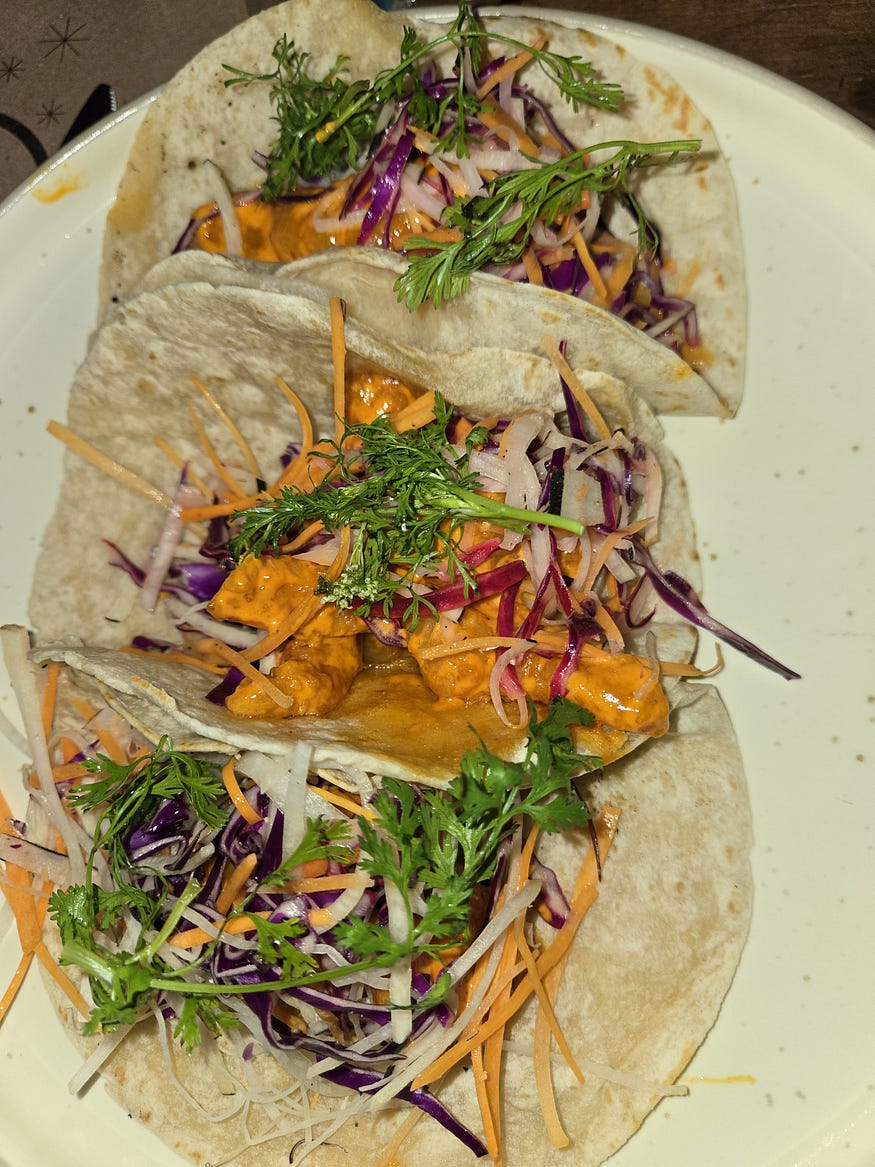
The best taco I’ve ever had was at the upscale rooftop restaurant Balcón del Zócalo, overlooking the historic Zócalo in Mexico City. That same year, in the food court of a luxury shopping mall in Kolkata, India, I tasted my first “Indian tacos” — fried tortilla shells filled with spicy grilled tandoori chicken. It was a perfect example of how the taco’s form can cross continents and adapt to local flavors while still feeling familiar.
When I first started grilling at home, I stuck to burgers, chicken, and kebabs. But over time, I learned to cook shrimp and fish with bold Mexican flavors, serving them in warm tortillas. The beauty of tacos is their infinite adaptability: you can load them with cheese, shredded vegetables, chopped tomatoes, and salsas that range from pleasantly mild to blisteringly hot. They’re endlessly creative, yet always accessible.
To me, the taco is the perfect dish — a brilliant combination of bold flavor, simplicity, and versatility, all in a compact, handheld package. Its journey from ancient Mesoamerican kitchens to Michelin-starred restaurants and street stalls across the globe reflects more than just culinary evolution — it tells a story of migration, resilience, innovation, and the universal joy of good food.




2 responses to “How the Taco Conquered America”
Your blog is a constant source of inspiration for me. Your passion for your subject matter is palpable, and it’s clear that you pour your heart and soul into every post. Keep up the incredible work!
Your blog is a true hidden gem on the internet. Your thoughtful analysis and engaging writing style set you apart from the crowd. Keep up the excellent work!