How Pain became Pleasure in My Affair with Chili Peppers
Many years ago, I went out to eat with a new friend I had just met in college. We chose a popular Mexican restaurant near campus and ordered burritos. Before the burritos arrived, we visited the salsa bar and loaded up our plates. I watched as he piled three or four jalapeños onto his plate. When we began eating, I was amazed to see him take a bite of burrito, chomp off half a jalapeño, and then chew and swallow it all down. Sweat lined his brow, but he seemed to be thoroughly enjoying himself. I wondered how he could bite into such a hot pepper and still relish it.
In our home, my mother was an excellent cook, but her cooking was always savory and never spicy. Pepper and chilies were rarely used in her dishes, so I never had the opportunity to try spicy food as a child. The food in our dorm, on the other hand, was the blandest and most tasteless I had ever eaten. I constantly craved my mother’s flavorful cooking and couldn’t wait to go home for the holidays.
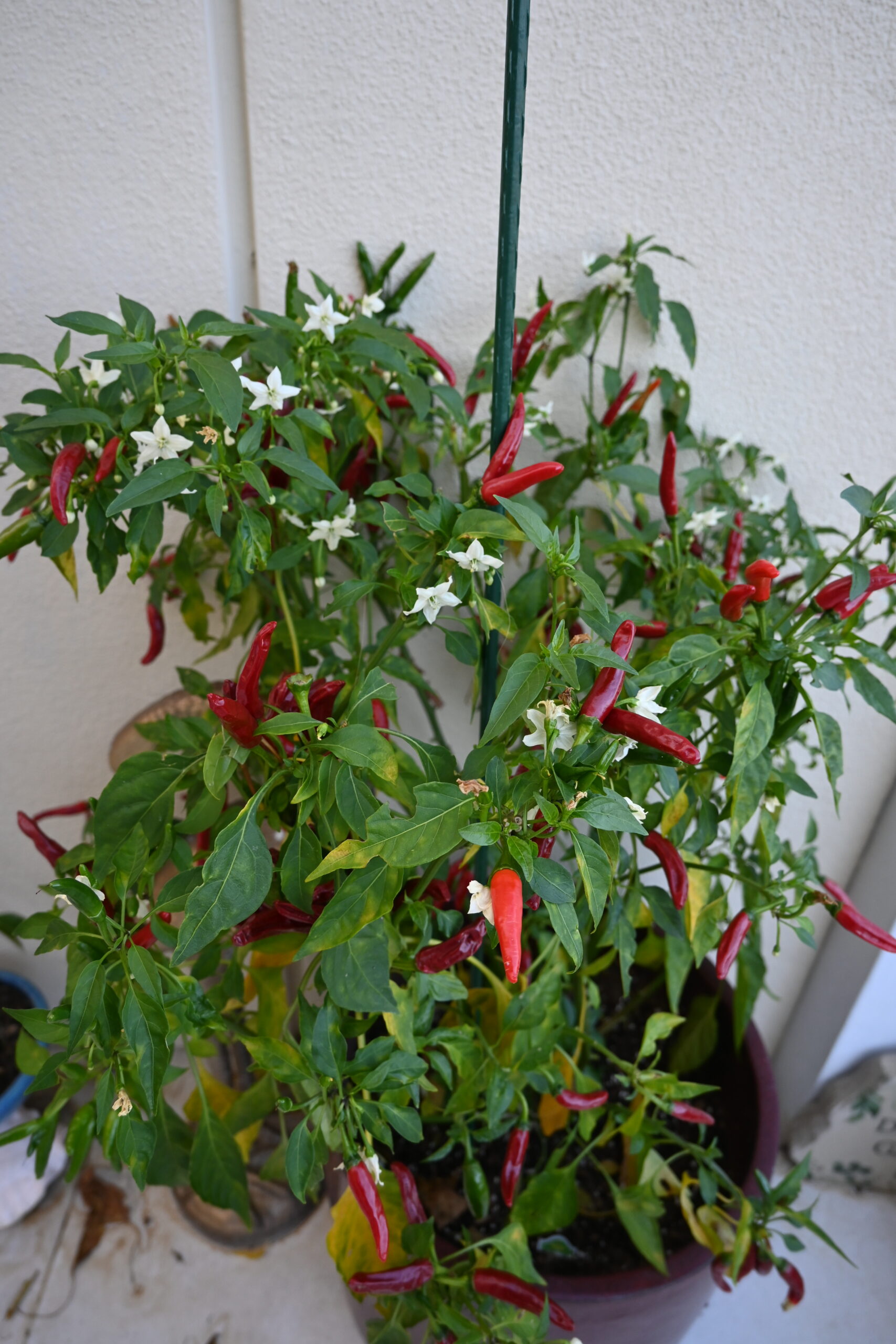
Now, many decades later, I am the one biting into hot chilies—and even growing several varieties of them in my garden. When we lived in a larger house with a big backyard, I had my own chili garden that included everything from Thai bird chilies to Mexican habaneros and even the fearsome Indian Bhut Jolokia. After downsizing to a smaller home, I still keep a few chili plants in pots on our patio so I can step outside and pluck fresh chilies while cooking or eating.
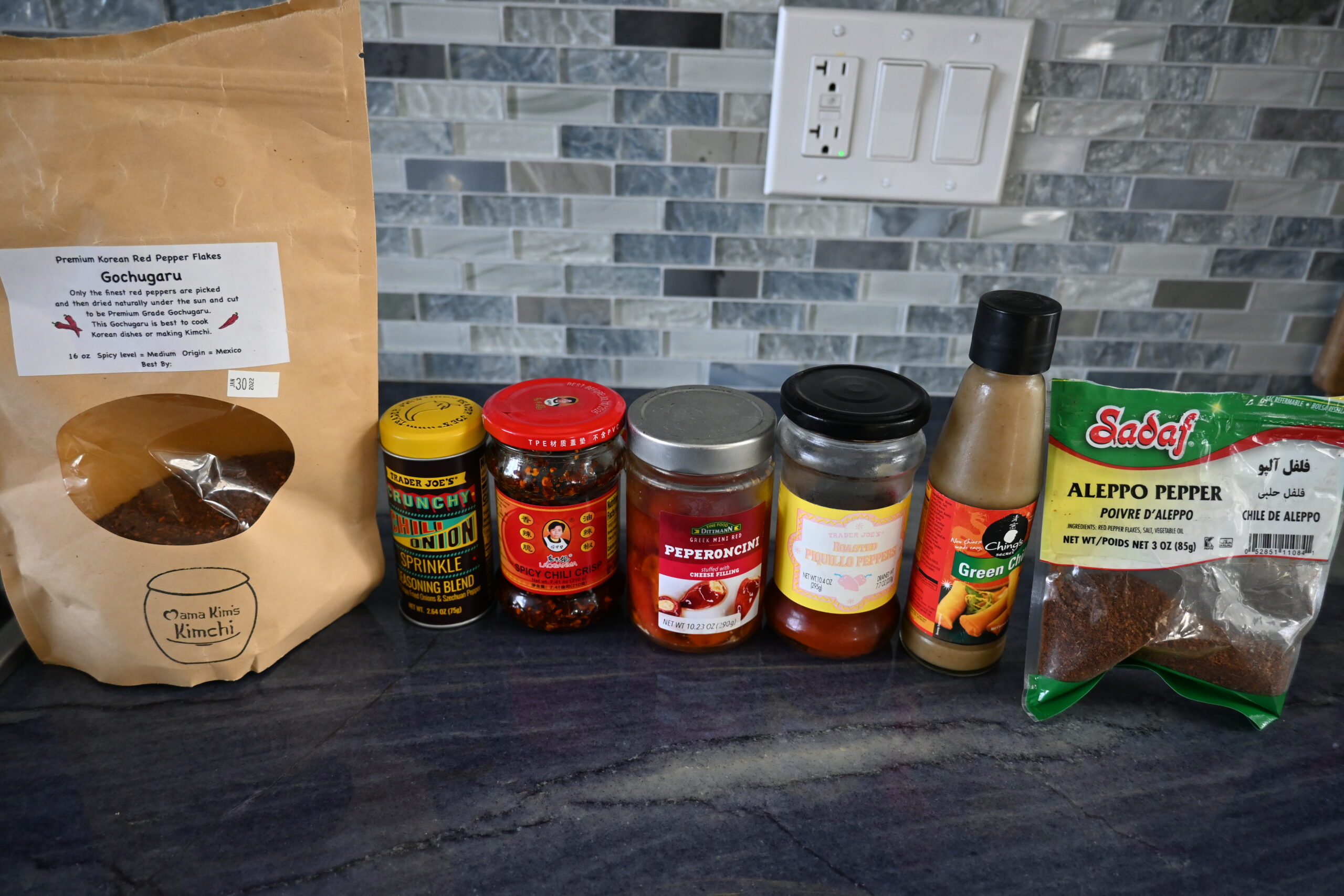
These days, I cannot enjoy a meal without a generous amount of heat. I pour Sriracha sauce over spicy Thai or Chinese dishes, chew on green chilies with Indian food, add the hottest salsa to my tacos and burritos, order extra-hot Nashville-style fried chicken and jerk chicken, and always top my pizzas with jalapeños and chili flakes. How did I become such a chili addict?
Since the day I watched my college friend eat raw chilies, I have been fascinated by them. How did this fiery fruit spread around the world—from Asia to Africa, Central America, and the southern United States? Even Europe is addicted to milder versions of chili peppers, such as bell peppers and paprika. In India, chili peppers even replaced indigenous black pepper, the spice that once launched the global spice trade.
Much to my surprise, I discovered that chili peppers are actually fruits and members of the Solanaceae family, which also includes potatoes, tomatoes, and eggplants. It is believed that chili plants first originated in South America, and their seeds were dispersed by birds to Central America, where they were first used by early nomadic peoples who had migrated across the Bering Strait during the last Ice Age. Archaeologists have found evidence of chilies being used in Mexican cooking as far back as 7000 B.C.E., and evidence of domestication around 5000 B.C.E. Five different strains of chili plants were grown in Mexico by the Aztecs and Mayans. The Arawaks later migrated to South America and the Caribbean, bringing tropical chili varieties with them.
Christopher Columbus encountered chili peppers on his first voyage, where they were locally known as aji. He mistakenly labeled them as a type of pepper, though they have nothing in common with black pepper from India or melegueta from West Africa. Samples brought back to Spain were touted for their supposed medicinal properties. Subsequent Spanish and Portuguese explorers carried more chilies to Europe, where they were initially grown as botanical curiosities. Within a few decades, chilies had become a staple ingredient in Spanish and Italian kitchens.
By the beginning of the 16th century, Portuguese sailors had introduced chilies to Africa and Asia, where they quickly became essential components of local cuisines. Unlike other exotic spices that were affordable only to the wealthy, chilies could be easily grown by common people, making them the poor man’s spice of choice.
Ingenious farmers bred new varieties: milder peppers were cultivated in Europe and the Mediterranean, while spicier ones thrived in tropical regions. Home cooks learned to use them in countless ways—adding fresh chilies to dishes, drying them for later use, or grinding them into powders. Later, entrepreneurs developed chili sauces and spice blends, marketing them around the world.
The world’s first bottled chili sauce is believed to be Sriracha, named after a town on Thailand’s eastern coast. In the United States, bottled hot sauce was a small industry before the Civil War began in 1861. In 1851, Irish immigrant Maunsel White, who had settled in Louisiana, created a “tobasco” sauce by adding vinegar to a boiled mash of spicy peppers. However, it was another Louisiana native, Edmund McIlhenny, who patented what became one of the world’s most famous hot sauces: Tabasco.
The compound responsible for the “burning hot” sensation in chilies is capsaicin. It is often mistakenly believed that capsaicin is concentrated in the seeds, but it is actually found in the pith—the white membrane that holds the seeds in place. The burning sensation occurs when capsaicin binds to the transient receptor potential (TRP) channels in our nerve endings, tricking the body into thinking it has been burned. Scientists believe that chilies evolved this mechanism to discourage mammals from eating them, since mammals (unlike birds) possess TRP channels and can destroy the seeds with their teeth. Birds, however, lack these receptors and help spread chili seeds through their droppings.
Measuring chili heat can be challenging, but the most widely accepted scale is the Scoville Heat Unit (SHU), developed by American pharmacist Wilbur Scoville in 1912. The scale is based on the amount of dilution required for tasters to no longer detect heat in a pepper extract mixed with sugar water. The greater the dilution, the higher the SHU rating. Values range from zero for bell peppers to several million for the hottest varieties. Some commonly used peppers have approximate SHU ratings as follows: Aleppo (10,000), Chipotle (2,000–8,000), Cayenne (30,000–50,000), Jalapeño (2,000–10,000), Thai Dragon (50,000–100,000), Habanero (200,000–300,000), Indian Bhut Jolokia (850,000–1,000,000), and Carolina Reaper (1.5–2.2 million). As of 2023, the world’s hottest pepper is Pepper X, developed by Ed Currie of the PuckerButt Pepper Company in South Carolina, with an astonishing 2.69 million SHU.
Chilies have also been used for purposes beyond cooking. The Aztecs and Mayans burned them as insect repellents and even weaponized them—using powdered chili in attacks, including one on a Portuguese fort. In Europe, they were hailed for their medicinal qualities, from treating ailments to serving as an aphrodisiac. In modern times, creams containing capsaicin are used topically to alleviate pain by stimulating nerve endings to release substance P, which initially sends pain signals to the brain but eventually depletes it, resulting in pain relief.
My love affair with chili peppers began cautiously—with just a few drops of mild chili sauce on meals at Asian restaurants. But tolerance builds quickly, and soon more heat was needed to achieve the same thrill—a classic recipe for addiction. I began craving stronger chilies and even asking chefs for their secret stash of the hottest varieties. Over the years, I’ve befriended many Thai, Chinese, and Mexican chefs by sharing my enthusiasm. The hottest dishes I’ve ever eaten were a habanero taco in Mexico City and a green chili stir-fry in Bangkok. I now carry antacids wherever I go, as heartburn is an inevitable companion to my passion—but it’s totally worth it, heartburn and all!
Chili peppers also offer numerous health benefits. They are rich in vitamins B1, B2, B3, B6, B9, A, C, and K, as well as iron, magnesium, phosphorus, and copper. They are low in calories and sodium and have been linked to improved immunity, better skin and hair health, cell regeneration, and enhanced eyesight. Studies from China, the U.S., and Japan have even shown that regular chili consumption is associated with longer life expectancy and lower rates of heart disease, stroke, cancer, diabetes, and obesity. From personal experience, I’ve noticed that spicy foods make me feel full faster, so I end up eating less overall. However, consuming extremely spicy food can increase inflammation in the upper gastrointestinal tract and lead to conditions such as GERD.
So why do we crave something that causes pain and discomfort? Capsaicin triggers the sensation of fire in the mouth without causing actual tissue damage. The brain reacts with sweating, flushing, and increased blood flow. While these effects deter most animals, humans—with our curious and thrill-seeking nature—found pleasure in this pain. Capsaicin stimulates the release of endorphins and dopamine, chemicals that induce euphoria, satisfaction, and well-being. It also fulfills our innate desire for safe excitement and challenge.
So, keep adding that hot sauce to your meals. Stock your pantry with chili powders, pastes, and sauces—and savor one of life’s simplest, spiciest pleasures.




2 responses to “Embracing the Burn”
Really insightful post — you explained the importance of local visibility extremely well. I’ve seen platforms like Lokando24.de help businesses in Germany with exactly that. Appreciate your great content!
Really insightful post — you explained the importance of local visibility extremely well. I’ve seen platforms like Lokando24.de help businesses in Germany with exactly that. Appreciate your great content!