From My Father’s Breakfast Table to America’s Cereal Bowl
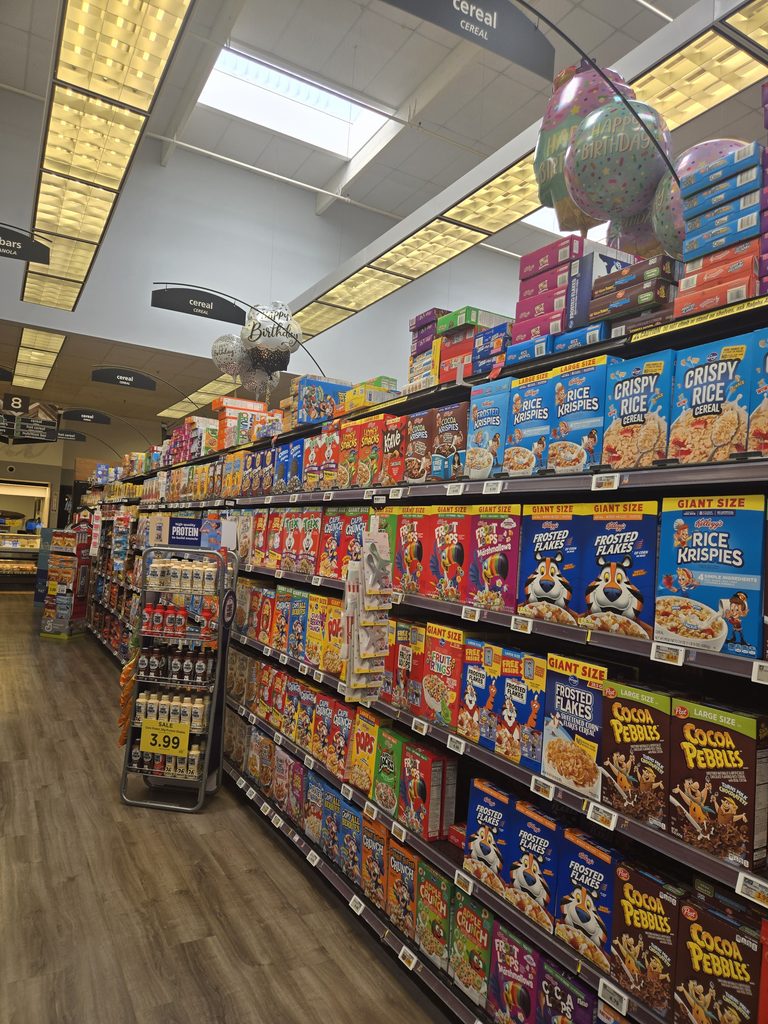
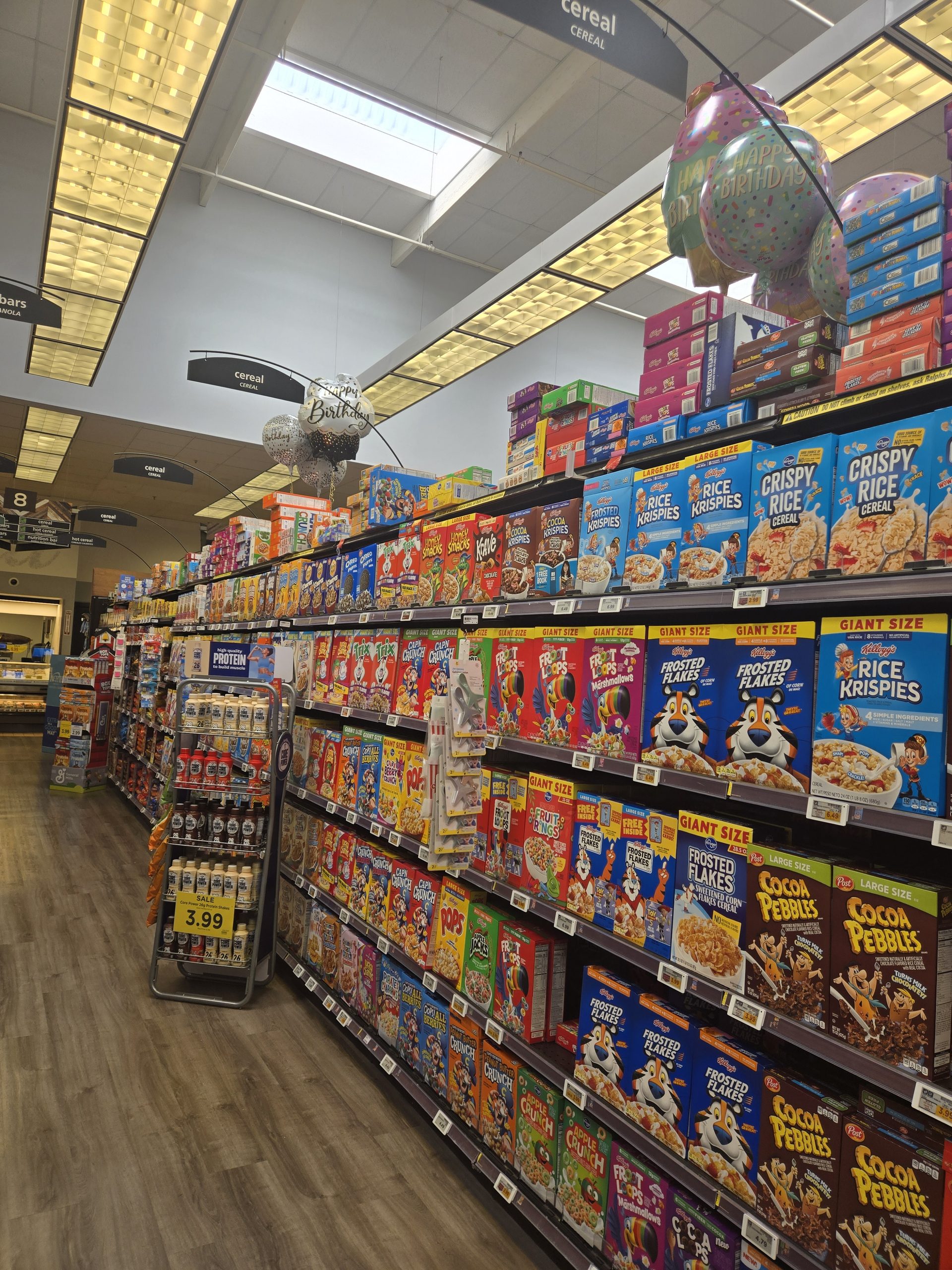
A grocery store aisle displaying cereal boxes (Photo Sam Sarkar)
Growing up, I watched my father eat two slices of toasted bread, slathered with butter and jelly, and a banana or other fruit six days a week. On Sundays, my mother would make something special, like an omelet or pancakes. In graduate school, when I moved out of the dorm and into an apartment, I tried following my dad’s breakfast routine, which I had grown up eating every day during my childhood. While the dorm provided daily breakfast in the form of a buffet with multiple options, on my own I had to figure out what to eat. Within a couple of weeks, I discovered that toasting bread and spreading butter or peanut butter and jelly was too cumbersome—and more expensive—than simply pouring cereal out of a box and adding cold milk. I have not stopped since. I eat cereal every weekday morning and make an omelet or French toast only on weekends.
So, how did cereal become so popular in America?
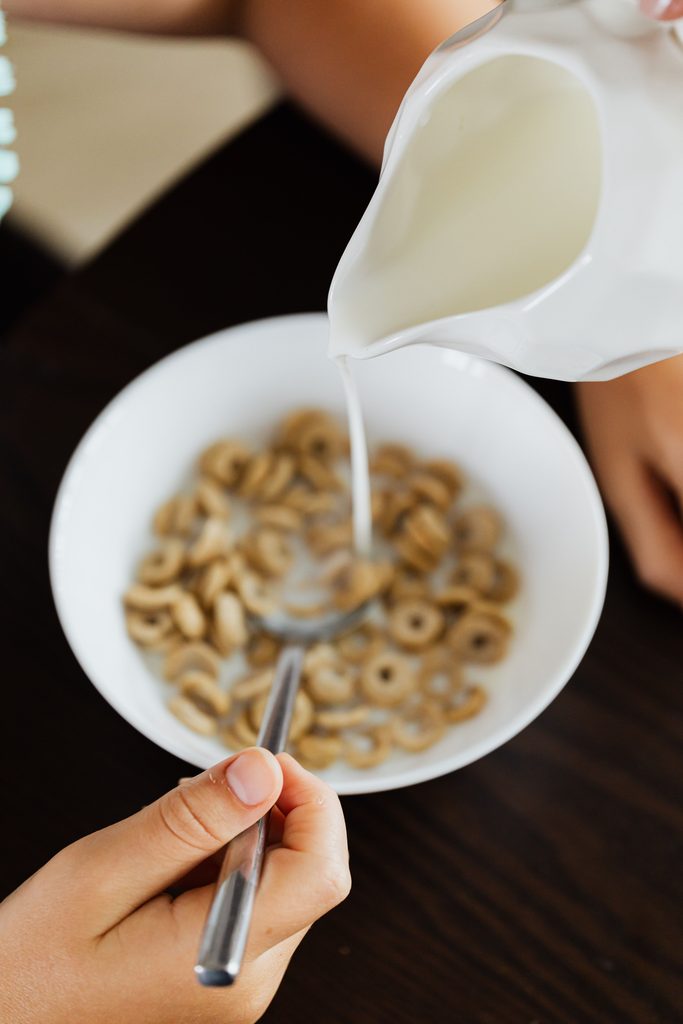
A bowl of cereal and milk (Photo courtesy of Pexels)
In France, most people will eat a piece of buttered sliced baguette or a croissant with their café au lait, while in Italy, people love bread or rolls with butter and jam alongside their caffè latte. In most parts of the world, breakfast traditionally consists of some form of bread—flatbread in the Mediterranean and North Africa, roti or chapati in South Asia—or rice, porridge, or pancakes, as in China.
In pre-Columbian America, Native Americans had already found ways to make ground corn palatable, producing foods now known as grits and hominy, which remain popular in the Southern United States. In the early nineteenth century, however, many Americans ate pork and coffee for breakfast. This diet was blamed for a variety of bowel problems, including constipation, and many began believing that constipation was God’s punishment for eating meat. Some Christians believed that pork was harmful to the soul and could fuel lust and laziness. Health purists spearheaded a movement toward a plant-based diet and away from meat.
A German immigrant in Akron, Ohio, helped begin the “cereal revolution” by selling oatmeal as a healthier substitute for pork in 1854. His company, the German Mills American Oatmeal Company, adopted the Quaker symbol. Oatmeal grew in popularity amid the large-scale influx of German and Irish immigrants. Others followed in his footsteps, and oatmeal gained further popularity, especially with the American Cereal Company’s “Quaker Oats,” introduced in 1888 and manufactured in Akron, Ohio, by combining the output from seven of the country’s largest mills.
In 1863, a health reformer, Dr. James Jackson, from upstate New York, invented Granula—rock-hard breakfast bricks that were promoted as a healthy and sin-free alternative that would clear both the mind and the bowel. Unfortunately, the product did not appeal to the masses, mainly because of its hard texture. However, it caught the attention of Dr. John Harvey Kellogg, a surgeon and health guru who ran a sanitarium, a Seventh-day Adventist health and wellness resort, in Battle Creek, Michigan.
Kellogg’s Sanitarium was extremely popular among the rich and powerful, who came to him for his unorthodox treatments. Kellogg started serving bran biscuits and eventually changed the name to Granola. By 1899, the Sanitarium was selling two tons of granola a week, but the biscuits were hard and almost inedible.
Kellogg and his brother, Will, endeavored to make a more palatable version. After six years of experimentation, a kitchen mishap led to the development of cereal flakes. They switched from graham flour to milled kernels of field corn. One batch of dough was inadvertently left overnight, allowing it to ferment. The fermented dough was easier to roll out and bake, yielding extra-thin and crunchy flakes: corn flakes.
The flakes became instantly popular, but the two brothers eventually had a falling-out, and Will bought out his older brother.
Charles Post, a failed suspender salesman who had moved to Battle Creek in 1895, was impressed by Kellogg’s cereal and started selling his own knock-off version. With his background in sales, he advertised his “Grape-Nuts” cereal in pamphlets with titles such as The Road to Wellville, making unsubstantiated claims that it could cure appendicitis, improve intelligence, and make red blood cells redder. By 1903, Post was making more than $1 million a year.
Dr. Kellogg refused to advertise because he thought it was beneath his dignity, and his sales suffered as a result. His brother Will had no such qualms and began advertising widely. One of his early successful campaigns encouraged women to “Wink at your grocer, and see what you get.” The reward was a free box of Kellogg’s Corn Flakes. Within a year, he was selling more than one million cases of cereal a year. By 1909, he was producing 120,000 cases of Kellogg’s Corn Flakes a day.
Similar to the current AI boom or the dot-com boom of 2000, investors across America became excited by the prospect of making millions. Would-be cereal barons descended on Battle Creek in droves, and by 1907, 107 brands* of corn flakes were being made in Battle Creek alone.
With so many brands competing for attention, manufacturers turned to attractive packaging to distinguish themselves from one another. One of the most popular cereals was Force, whose mascot was Sunny Jim, a strutting, top-hatted gentleman. Other cereal makers soon followed with mascots of their own. During the Great Depression, Post Toasties hired a young artist named Walt Disney* to create cartoon animals for its box covers and reportedly paid him an unheard-of $1.5 million. Disney later used the money to build his empire.
Initially, cereal marketing was directed at housewives, emphasizing ease and convenience while promising a nourishing and healthy meal. Cereal makers soon realized, however, that their primary consumers were children. They began targeting children with clever advertising and colorful fictional characters. Skippy, who extolled the virtues of Wheaties, was very popular. Soon, the Lone Ranger, Dick Tracy, and Buck Rogers were promoting cereals, and by the 1960s, 90 percent of cereal advertising was reportedly devoted to children.
To keep children hooked, manufacturers began adding sugar. Then came television advertising aimed directly at children. With the advent of color television, colorful characters promoted cereals to a new generation of young consumers. Tony the Tiger became hugely popular and was followed by dozens of other characters.
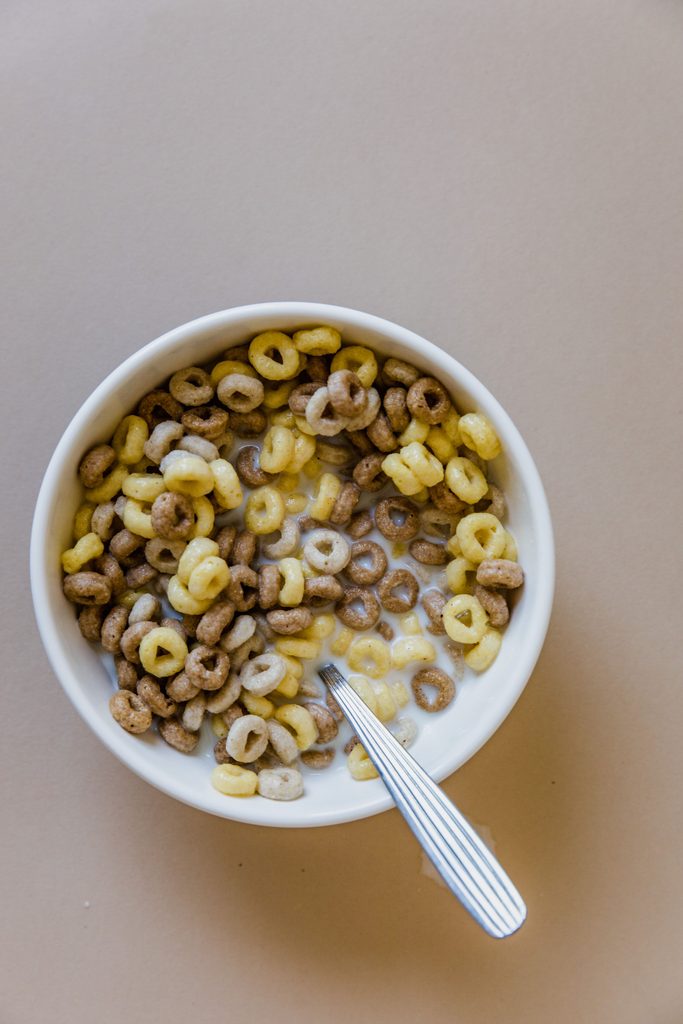
Bowl of cereal and milk (Photo courtesy of Pexels)
Parents, child psychologists, and consumer groups became increasingly concerned about the targeting of children. This eventually led Congress, in 1990, to pass a law restricting television characters from pitching products directly to children in the middle of a show. By the 1970s, the dangers of excessive sugar and carbohydrates had also become better known, and despite aggressive marketing, cereal no longer seemed as healthy as it once had.
The Nutrition Labeling and Education Act was also passed in 1990, requiring nutrition information on packaged foods. Declining birth rates and the resulting smaller number of children—the cereal industry’s main consumers—along with low-carbohydrate diet trends, changing tastes, and growing gluten intolerance have contributed to a steady decline in cereal consumption and sales. Cereal consumption peaked in 1996 and has been on a slow decline ever since.

Nutrition label on a box of cereal (Photo by Sam Sarkar)
Cheerios, originally named Cheerioats, is the most popular cereal in America, followed by its sweeter version, Honey Nut Cheerios. General Mills, the maker of Cheerios, had annual sales of more than $19 billion in 2025, although sales have trended downward in recent years. Kellogg, now Kellanova, had annual sales of around $13 billion in the same year. The two giants combined had astounding sales of around $100 per year for each person living in the United States.
The story of cereal has come full circle—from an attempt to find a healthier alternative to a meat-heavy diet, to unprecedented popularity fueled by clever marketing, and finally to declining sales brought about by changing tastes and dietary trends.
And yet, every weekday morning, I still pour cereal into a bowl, add cold milk, and think of the breakfast decision I made in graduate school all those years ago.
References:
*https://www.mentalfloss.com/food/how-cereal-transformed-american-culture
*https://www.tastingtable.com/1623226/history-of-cereal-for-breakfast/
*https://www.seriouseats.com/history-of-breakfast-cereal-mascots
*https://cartoonresearch.com/index.php/part-of-a-balanced-breakfast/